Read every series in the right order
Reuven Malther Books in Chronological Order – Complete Reading Guide
Must-Have

Amazon.com
The Promise: A Prize-Winning Novel
Trending Now
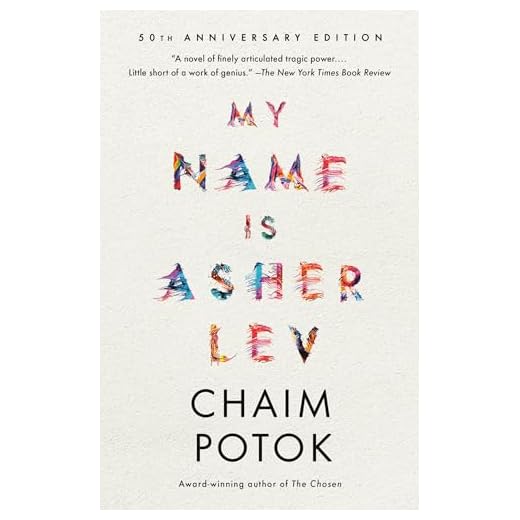
Amazon.com
My Name Is Asher Lev – A Coming-of-Age Tale
Table of Contents
Quick Answer (TL;DR)
Looking for the Reuven Malther Books in Chronological Order? Read them exactly as published:
- The Chosen (1967)
- The Promise (1969)
That’s the complete Reuven Malter (often misspelled “Malther”) duology. No prequels, no side novels you must slot in—just two beautifully linked books that stand tall on their own and sing together as one story.
Top Rated
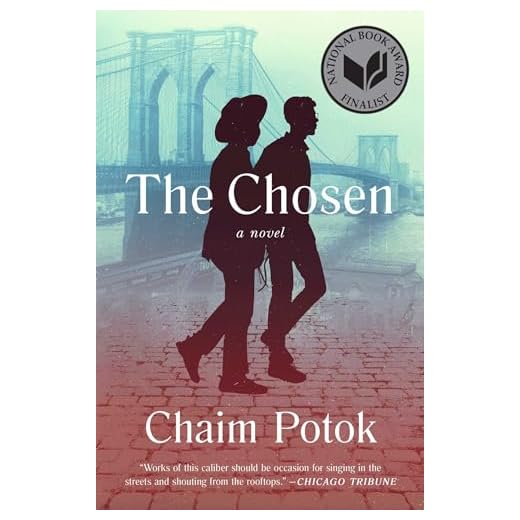
The Chosen – A Spiritual Journey
Explores faith and friendship in conflict
This novel delves into the complexities of faith and the bonds forged between two aspiring rabbinical students amid cultural clashes. A powerful narrative that captivates the reader’s heart and mind.
Introduction
Some classics hit you with fireworks; others arrive like a quiet conversation that changes your life. Chaim Potok’s Reuven Malter series—widely known through its first novel, The Chosen, and followed by The Promise—belongs to the latter. Set largely in 1940s–1950s Brooklyn, these novels track the unlikely friendship of two Jewish teens, Reuven Malter and Danny Saunders, as they come of age amid World War II, Zionism, American assimilation, and the push–pull of tradition and modern scholarship.
Quick Facts
| Item | Details |
|---|---|
| Series Name | Reuven Malter / “Reuven Malther” series (2 novels) |
| Primary Works | The Chosen (1967), The Promise (1969) |
| Author | Chaim Potok |
| Setting | Brooklyn, New York (mid-1940s to late-1950s); American Jewish communities; university and yeshiva life |
| Length (approx.) | The Chosen ~ 300–360 pp (editions vary); The Promise ~ 340–380 pp |
| Read Time | 6–10 hours each at 35–50 pp/hr |
| Reading Difficulty | Accessible literary fiction; clear prose with philosophical/religious discussion |
| Genres | Coming-of-age (bildungsroman), literary fiction, historical fiction, Jewish American literature |
| Content Guidance | Hospital scenes/accident aftermath, family conflict, grief, religious disputes, institutional pressures; no graphic content |
| Ideal Age Range | 13+ for advanced readers; 15+/adult ideal for context (history, theology) |
| Media Adaptations | Film of The Chosen (1981); stage play adaptation (1999 and later productions); short-run musical (1988) |
| Best Entry Point | The Chosen (start here; The Promise is its direct sequel) |
About the Reuven Malther Book Series
Potok’s duology is anchored by one of modern literature’s great friendships: Reuven Malter, an intellectually curious Modern Orthodox teen raised by a scholarly journalist father, and Danny Saunders, the brilliant son and heir of a Hasidic rebbe. Their meeting—an accident on a Brooklyn softball diamond—unfolds into a relationship that tests their loyalties to family, faith, and self.
While the Reuven Malther Books in Chronological Order is a simple two-step ladder, the novels carry extraordinary thematic weight. Potok examines:
- Tradition vs. modernity: Talmud study, Hasidic leadership, academic Biblical criticism, and Freudian psychology collide and converse.
- Silence, speech, and interpretation: Who speaks? Who listens? How do we read text, history, and each other?
- Identity and vocation: What it means to be “chosen”—by family destiny, by faith, by intellect—and to choose one’s own life anyway.
Potok’s prose is warm yet exacting. You’ll find vivid neighborhoods, library stacks and study houses, hospital rooms and living rooms where ethics and affection intersect. Few works render the inner life of religious communities with such empathy for multiple points of view.
Reuven Malther Books at a Glance
| # | Title | Amazon Buy Links |
|---|---|---|
| 1 | The Chosen (1967) | Buy On Amazon |
| 2 | The Promise (1969) | Buy On Amazon |
*We present compact buy paths by format name; search the exact title + format in your Amazon region to choose cover design, printing, and price.
Reuven Malther Books in Chronological Order
1) The Chosen (1967)
Where it begins: Brooklyn, 1944. Two boys—Reuven Malter and Danny Saunders—live only blocks apart but in different Jewish worlds. A fierce softball game ends in a hospital room, and what might have remained a neighborhood rivalry becomes something far more lasting: a friendship that crosses Hasidic and Modern Orthodox lines, father–son expectations, and the immediate aftermath of war.
What you’ll experience (no spoilers):
- A nuanced portrait of religious life—daily prayer, Sabbath rhythms, and the centrality of Talmudic study—rendered without didacticism.
- Potent father–son dynamics: Reuven’s father, a compassionate scholar-journalist; Danny’s father, a Hasidic leader whose hard, ethical silence conceals a radical pedagogy.
- The historical moment: World War II news, the Holocaust’s shattering revelations, and debates over the future State of Israel filter into teenage lives, shaping theology and politics alike.
Why it matters: The Chosen sets up every moral and intellectual fault line the sequel will test. It’s also one of the most generous depictions of friendship—and what it costs—ever written.
2) The Promise (1969)
Where it continues: Postwar New York, later 1950s. Reuven is a rabbinical student; Danny, having defied familial expectation, is training in psychology. A troubled adolescent named Michael draws their paths back together, just as Reuven’s own scholarly commitments ignite conflict with traditional authorities.
Must-Have
The Promise: A Prize-Winning Novel
Captivating story about love and sacrifice
This Booker Prize-winning novel weaves a tale of love, betrayal, and the influence of family. Its poignant characters and intricate storytelling make it a compelling read for all.
What you’ll experience (no spoilers):
- Faith under examination: academic biblical criticism vs. sacred continuity, not as caricature but as living arguments inside real people.
- Vocation under pressure: Reuven’s path to ordination imperiled by institutional politics; Danny’s clinical choices tested by conscience.
- Friendship under stress: confidences, interpretive differences, and the demand that love be both honest and brave.
Why it matters: The Promise isn’t merely “what happened next”; it’s about what it takes to live with knowledge—to make scholarship and compassion hold hands when authority and text pull in different directions.
Series Timeline & Character Development
Reuven Malter (a.k.a. “Malther” in some SEO parlance)
- Early arc: Bright, observant, anchored by an ethical father who thinks with both head and heart.
- Emerging conflicts: Navigates the line between modern scholarship (including textual criticism) and traditional authority, sorting inherited belief from examined conviction.
- Growth vectors: Moves from student to moral agent—someone who speaks up when silence would be safer, and who treats interpretation as a sacred responsibility.
Danny Saunders
- Early arc: A prodigious mind raised for Hasidic leadership; curiosity wider than his prescribed world.
- Emerging conflicts: Attraction to secular psychology (Freud et al.) and its potential collision with his familial role.
- Growth vectors: Discovers that ethical care for other people—patients, friends, even adversaries—requires rigorous self-knowledge and sometimes painful breakage with expectation.
Their friendship
- Begins with an accident; deepens through study, silence, and shared courage; survives honest disagreement. It shows how listening can be love’s most difficult and necessary form.
Historical frame
- The Chosen: wartime to 1948.
- The Promise: several years later, when institutional and personal stakes are both higher.
Across both novels, the American Jewish experience widens: Yiddishkeit in Brooklyn streets, university lecture halls, hospital corridors, synagogues and study houses—each space tugging mind and heart in different ways.
Novels Sorted by In-Universe Events
The internal chronology is linear and clean:
- The Chosen — Reuven and Danny meet as teens (1944), then move through the war’s end and the birth of Israel.
- The Promise — Picks up years later, with Reuven in rabbinical school and Danny in psychology, facing new professional and spiritual tests.
There are no time-twisty prequels or interludes to reorder. Reading in-world order is identical to publication order—serendipity for anyone specifically seeking the Reuven Malther Books in Chronological Order.
Novels Sorted by Publication
- The Chosen (1967)
- The Promise (1969)
(Again: publication order equals in-universe order.)
Trending Now
My Name Is Asher Lev – A Coming-of-Age Tale
An exploration of art and identity
This coming-of-age story follows young artist Asher Lev as he struggles between his Jewish upbringing and his passion for art. It raises profound questions about loyalty, creativity, and self-discovery.
Companion Works
While Potok wrote other celebrated novels—My Name Is Asher Lev, The Gift of Asher Lev, In the Beginning, Davita’s Harp, and more—none are part of the Reuven/Danny duology. That said, if you’re curating a thematic shelf:
- My Name Is Asher Lev and The Gift of Asher Lev explore the friction between artistic vocation and Hasidic community—resonant with Danny’s struggle, though independent.
- Essays & interviews with Potok (in various collections) illuminate his view of core-to-core culture encounters—the philosophical engine of his fiction.
For teachers and book clubs, there are reputable reading guides and discussion questions in many trade paperbacks—great for scaffolding conversations about faith, family systems, and the ethics of interpretation.
Editions & Formats (hardcover, collector, audio)
- Paperback / Trade: Affordable, often with reading-group back matter—discussion questions, interviews, historical notes.
- Mass Market (older printings): Compact, widely available used; print size may be tight for marginal notes.
- Hardcover: Durable for libraries and personal collections; some editions have strong cloth bindings ideal for classroom sets.
- Kindle / eBook: Searchable for names, terms, and passages; easy to annotate when teaching or writing papers.
- Audiobook: Narrations vary by edition, but the text’s clarity and dialogue-driven scenes perform excellently in audio, especially for family/club co-reads.
Collector tip: If you want a matching pair, look for the Simon & Schuster trade paperbacks with coordinated cover designs, or pair classic hardcovers via ISBN checks; used-book marketplaces often list dust-jacket variants.
Why Read Reuven Malther Books in Chronological Orde?
- Authorial design: Potok intentionally builds The Promise atop the ethical and emotional architecture of The Chosen.
- Character continuity: Key relationships, scholarly debates, and personal vows gain meaning only if you’ve watched them form.
- Historical throughline: The movement from immediate postwar years to late-1950s tensions is a lived timeline—mess with it and you lose resonance.
In short, the Reuven Malther Books in Chronological Order is also the most powerful literary experience of the two books.
Author Spotlight: Chaim Potok
Chaim Potok (1929–2002) was an American novelist and rabbi whose work mapped the meeting point between traditional religious life and modern secular knowledge. His debut, The Chosen (1967), settled onto the New York Times bestseller list for 39 weeks and introduced mainstream American readers to the complexity and beauty of Jewish communities that were often caricatured or invisible in mid-century fiction.
Potok’s trademarks:
- Ethical seriousness without preachiness: He lets arguments breathe, framing even “opposing” positions with sympathy and steel.
- Intellectual drama as narrative engine: Debates over text, method, and medicine carry as much suspense as ballgames or courtroom scenes.
- Tender attention to fathers and sons: Sometimes love becomes silence or sacrifice; sometimes it is the courage to speak.
Beyond the Reuven/Danny duology, Potok’s Asher Lev novels and other works broaden his core theme: when cultures meet at their centers (belief, art, science), the encounter is painful—but it’s also where human growth most truly happens.
Media Adaptations (film, stage, TV)
- Film: The Chosen (1981) starred Rod Steiger and Robby Benson, bringing the friendship’s conflicts and reconciliations to the screen with period texture.
- Stage: Potok co-adapted The Chosen for the theater with Aaron Posner; the play premiered in 1999 (Arden Theatre Company) and has since been produced widely, especially in educational/community venues.
- Musical: A short-run off-Broadway musical (1988) experimented with adapting the story to song; it closed quickly but remains a curiosity in Potok’s adaptation history.
For educators, the stage version is particularly useful: it compresses settings while preserving the intellectual and familial stakes, making it ideal for classroom discussion of theme and character.
FAQs
Is the series sometimes called “Reuven Malther”?
Yes. For search visibility, you’ll see “Malther,” but the canonical spelling in the novels is Malter. We use “Reuven Malther Books in Chronological Order” here to help readers find this guide while noting the correct character name.
Do I need to read any Potok novels before The Chosen?
No. Start with The Chosen, then read The Promise. If you love Potok’s voice, branch to Asher Lev or Davita’s Harp as thematic companions.
Are these appropriate for teens?
Yes—especially for high schoolers (grades 9–12). Complex topics (Holocaust aftermath, theology debates) benefit from guided discussion, but the prose is approachable, the scenes humane.
Is the order ever reversed for teaching?
Don’t. The Promise presumes knowledge of people and stakes established in The Chosen. You’ll blunt the power of several key revelations by switching.
How “religious” are the books?
They’re deeply engaged with religious life, but not insular. Potok writes for general readers, framing theology and scholarship as part of compelling human stories.
What themes should a book club highlight?
– Silence as pedagogy vs. speech as care
– Friendship across difference
– Chosenness and choice
– The ethics of interpretation (text, history, people)
– Vocation: duty to family vs. duty to the self and the world
Final Thoughts
If you’ve ever stood at the crossroads of who you’re supposed to be and who you might become, these two slim novels will feel vast. Reading the Reuven Malther Books in Chronological Order—The Chosen followed by The Promise—lets Potok’s carefully tuned echoes carry from one book to the next: prayers and proofs, silences and songs, debates that begin in classrooms and end in the heart. They’re humane, wise, and endlessly discussable. Start with the softball game. End where real friendship always ends: in hard-won hope.