
Read every series in the right order
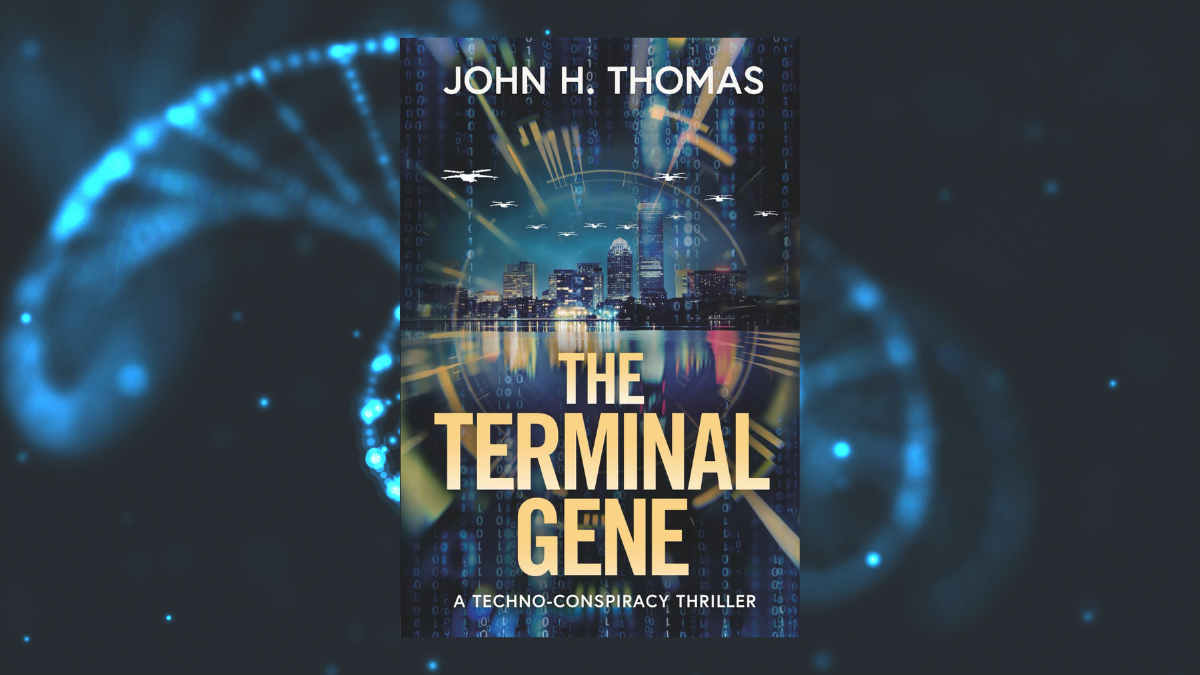
“The Terminal Gene” Puts a Chilling Spin on the Future: What If Your DNA Could Predict Your Exact Time of Death?
A new techno-thriller is asking one of those questions that lands with a thud in your chest: what would happen if the moment of your death was written into your DNA from birth—and someone found the code?
That’s the engine behind The Terminal Gene, a fast-paced, near-future thriller from John H. Thomas that blends high-stakes science with corporate power plays, ethical landmines, and the kind of escalating danger that turns “I just need a quiet weekend to work” into “we need to run—now.”
Set in 2029, the novel follows Dr. Emily Harper, a scientist working at Helix, a multinational biotech company in Boston. Emily’s discovery isn’t just groundbreaking—it’s world-altering: a gene that appears universal across living creatures, one that can be interpreted as a countdown to death. The implications are immediate and terrifying. Life insurance. Employment. Healthcare. Political power. Personal relationships. The very psychology of how people live their lives.
And then the most important question arrives right behind the science: who gets to control that information?
In the world of The Terminal Gene, the answer isn’t “society will thoughtfully debate it.” The answer is: powerful people will do powerful-people things.
What begins as a scientific revelation quickly becomes a thriller about survival, loyalty, and the price of truth—propelled by betrayals, double-crosses, and a corporate leadership that looks at ethics the way a shark looks at a lifeboat.
At a Glance
Title: The Terminal Gene
Author: John H. Thomas
Category: Techno-thriller / near-future suspense
Setting: Boston, 2029 (with a familiar-but-evolved tech landscape)
Core idea: A gene that predicts the exact time of death is discovered—and weaponized
Story promise: Fast pacing, escalating threats, corporate intrigue, and moral stakes
Table of Contents
Key Details
- The Terminal Gene centers on a scientific discovery with massive real-world implications—then explores what happens when money and power get involved.
- The novel leans into classic techno-thriller energy: corporate villainy, sharp pacing, urgent stakes, and chapter structures that keep momentum high.
- Emily Harper and her fiancée, Tyler Reed, become the emotional and tactical center of the story as the danger moves from screens to real-life attacks.
- Themes include data ethics, determinism vs free will, corporate legacy-building, and the cost of protecting truth.
- The near-future setting stays relatable (familiar tech, heightened surveillance, drones as daily background noise), which makes the premise feel uncomfortably plausible.
What’s Happening: A Near-Future Thriller Built on a “Too-Real” Scientific Premise
Techno-thrillers work best when they feel like they’re only a few steps ahead of reality. The Terminal Gene taps into that sweet spot: the science feels close enough to imagine, and the societal consequences feel immediate enough to worry about.
The premise is simple to summarize—but hard to shake once you’ve heard it:
A scientist discovers a universal gene that can predict the exact time of death.
From there, the story expands the way a pressure crack expands in glass. Because once information like that exists, it doesn’t stay neutral for long. It becomes leverage. It becomes currency. It becomes a tool.
And if you’ve read enough thrillers—or watched enough real-life headlines—you already know where this goes.
The Premise: A Discovery That Could Change the World
In 2029, Dr. Emily Harper works in the labs of Helix, a major biotech company headquartered in Boston. She’s not portrayed as a reckless genius chasing glory. Instead, she’s careful—aware that discovery and responsibility are supposed to travel together.
That’s why the gene she uncovers hits so hard.
It isn’t just rare. It isn’t just medically important. It appears to be universal—shared across living creatures—and it carries a chilling message: a measurable “endpoint,” a timestamp that can be interpreted as time of death.
Emily recognizes the ethical nightmare instantly.
If that information becomes public before the science is fully understood, people will exploit it. Not “might.” Will.
And the most obvious example is also one of the most disturbing: life insurance. If death can be predicted, risk becomes calculable. If risk becomes calculable, entire industries reshape around it. Policies change. People become uninsurable. Employers discriminate. Governments plan. Criminals target. Families fracture. Markets adapt.
Emily’s early response is grounded in responsibility: slow down, analyze, consider consequences.
But a discovery like this doesn’t exist in a vacuum. It exists inside a corporation.
And corporations don’t do “slow” very well when legacy and profit are on the table.
Setting: Boston, 2029—Familiar, But Not Comfortable
One reason the premise lands is that the world around it feels recognizable. This isn’t a distant space opera future. It’s the near-future version of our own routines.
You still have everyday technology. You still have familiar urban life. But there’s an edge to it—especially the presence of surveillance and drones that hover in the background like an accepted part of modern existence.
That detail does more than set atmosphere; it reinforces the novel’s central anxiety:
When technology becomes ubiquitous, it also becomes invisible.
And when it becomes invisible, it becomes easier to misuse.
The book uses this “almost now” future to keep the tension grounded. You’re not distracted by wild speculative systems—you’re watching a plausible world slide into a darker version of itself.
The Characters Driving the Tension
News-style coverage of fiction is always a balance: you want enough character detail to clarify the hook, without turning the article into a full plot breakdown. Here’s the core cast as the story presents them.
Dr. Emily Harper: Scientist, Ethical Anchor, Target
Emily is positioned as both the discoverer and the conscience of the novel. She sees the gene’s promise and peril at the same time. That makes her compelling in a genre that sometimes turns scientists into plot devices.
Her conflict is layered:
- scientific integrity vs corporate pressure
- personal safety vs public responsibility
- fear vs action
- silence vs truth
And as soon as the stakes become real—threats, escalations, attempted violence—Emily isn’t just a thinker. She becomes a survivor.
Tyler Reed: The Protector with Skills That Suddenly Matter
Tyler Reed, Emily’s fiancée, is a former Marine—an archetype that can go generic fast in lesser thrillers. Here, Tyler’s role is to amplify the story’s physical stakes: when Helix’s pressure turns into real danger, Tyler has the skills to respond.
But his role isn’t only tactical. It’s emotional. Tyler’s devotion raises the personal cost of the story:
What do you do to protect the person you love when the threat is systemic—and wealthy—and willing to break rules?
James Kessler: The CEO with “Legacy” on His Mind
Every great techno-thriller needs a power center, and The Terminal Gene delivers one in Helix CEO James Kessler. He’s described with the kind of bold villain energy that calls back to classic thrillers—someone who sees the future as something he can own.
Kessler’s obsession isn’t just profit; it’s permanence. He wants Helix positioned as the defining force for the next century. That’s the kind of motivation that turns ethics into an inconvenience and human lives into obstacles.
Kessler represents the book’s darker question:
When the most world-changing discoveries happen inside private companies, who decides what’s “acceptable”?
Why This Story’s Central Question Hits So Hard
The scariest part of The Terminal Gene isn’t the chase sequences or the betrayals.
It’s the thought experiment at the center:
What would knowing your death date do to a person?
Would it make you live more fully—or freeze you in fear?
Would it deepen love—or poison it with countdown anxiety?
Would it create gratitude—or obsession?
Because even if you’re not a scientist, you can’t help imagining it:
- What would you change if you knew you had five years?
- What would you ignore if you had fifty?
- What would you become if you had six months?
That’s the emotional fuel. The thriller plot gives the book speed, but the existential premise gives it weight.
The Ethical Shockwave: The Real Stakes Behind the Science
One of the reasons readers tend to gravitate toward techno-thrillers is that the best ones aren’t just about gadgets—they’re about consequences.
In The Terminal Gene, the consequences are immediate and wide-ranging. The gene becomes a symbol of:
1) Data as destiny
If your death is encoded, does that reduce you to an endpoint?
Does “knowing” become a kind of prison?
2) Predictive science as power
Prediction is never neutral. The ability to predict gives someone leverage:
- in policy
- in finance
- in relationships
- in war
- in crime
- in medicine
3) The monetization of human life
The story’s life insurance implication is a brutal example, but it’s not the only one. Any system built on risk and prediction could be reshaped by this gene.
The novel makes a clear argument through its tension: if the gene exists, it will be used—ethically or not.
Plot Momentum: When Corporate Pressure Turns Into a Fight for Survival
After Emily’s discovery, the danger escalates quickly. The story doesn’t linger in philosophical debate for too long. It moves into the core promise of a techno-thriller: action driven by secrets.
The threats start in a way that feels modern—digital warnings, suspicious signals, pressure that arrives through systems. But the danger doesn’t remain abstract. It becomes physical. It becomes targeted.
Emily and Tyler can’t simply “walk away,” because walking away doesn’t erase the fact that Emily knows something monumental. And in corporate thrillers, knowledge is a liability until it’s controlled.
So the couple does what thriller protagonists always end up doing when institutions become dangerous:
- they run
- they investigate
- they stop trusting official channels
- they try to uncover the real plan behind the company’s leadership
And as they dig deeper, the book leans hard into its promise of twists—betrayals, double-crosses, shifting alliances, and that constant feeling that the next threat could come from anywhere.
Style Notes: Classic Techno-Thriller Energy With Modern Pacing
One of the standout structural features mentioned is the chapter formatting: each chapter includes a title that hints at the content. That’s a classic thriller move, and when it’s done well, it keeps momentum high. It also gives the book a slightly cinematic feel—like scene markers that keep you moving.
The writing also reportedly drops in occasional vivid descriptive lines—quick flashes of atmospheric detail. That matters more than people think in a fast thriller, because it prevents the action from becoming flat.
In short: the book aims to deliver both propulsion and texture.
Why It Matters: Techno-Thrillers Are Having a “Reality-Adjacent” Moment
Books like The Terminal Gene land particularly well right now because audiences are already thinking about:
- genetic testing
- personal data
- predictive systems
- corporate ownership of health information
- privacy vs convenience
- surveillance as a default feature of modern life
A techno-thriller doesn’t need to be a documentary to feel timely. It just needs to press on the right anxiety points.
And this premise presses hard.
Who This Book Is For
If you’re recommending The Terminal Gene to a reader, the most accurate way to position it is:
Read The Terminal Gene if you like:
- near-future thrillers that feel plausible
- biotech or DNA-driven “what if” premises
- corporate intrigue with big ethical stakes
- fast pacing with escalating danger
- protagonists who are smart but pressured into action
- twists, betrayals, and shifting motives
You may want to skip it if you prefer:
- cozy, low-stress reads
- stories without corporate villainy
- purely character-driven literary fiction with minimal plot propulsion
What to Read Next
If The Terminal Gene sends you down the rabbit hole, here are a few internal guides you might want to browse next, depending on what you’re craving:
- For more near-future and speculative picks: Best Science Fiction Books of 2025
- If you want page-turning suspense from a proven thriller voice: Best Harlan Coben Books
- If you like stories that feel cinematic and want to track what might hit screens next: Upcoming Book-to-Screen Adaptations
About the Author: John H. Thomas
John H. Thomas lives in the Seattle area with his wife and their cat, Karmann. Raised in a nomadic military family, he brings a curiosity-driven energy to his background and interests—along with a clear fondness for fast-moving stories and high-stakes scenarios.
That blend (military-rooted perspective + curiosity + modern concerns) fits neatly with the tone and structure of The Terminal Gene, which leans on both tactical urgency and ethical tension.
Final Take: A High-Concept Thriller Built Around an Unforgettable Question
The Terminal Gene taps into a premise that’s instantly gripping and deeply unsettling. It combines a world-changing discovery with the machinery of corporate power, then adds urgency through escalating threats, betrayals, and a protagonist forced to act before the truth gets buried—or monetized.
For readers who like thrillers that feel one step ahead of reality, The Terminal Gene offers a compelling mix: a modern setting, an ethically explosive discovery, and the kind of relentless forward motion that makes “just one more chapter” feel inevitable.