Read every series in the right order
The Dark Tower Books in Chronological Order – Complete Reading Guide
Table of Contents
Quick Answer (TL;DR)
If you want The Dark Tower Books in Chronological Order for a first-time read, keep it simple and follow the core seven in the order most readers consider “the main quest path”:
- The Gunslinger
- The Drawing of the Three
- The Waste Lands
- Wizard and Glass
- Wolves of the Calla
- Song of Susannah
- The Dark Tower
That sequence is both the cleanest entry point and the most emotionally satisfying ride.
If you’re doing a reread (or you’re here because you love reading-order debates), jump down to the sections on in-universe events and companion works—because that’s where the Tower starts pulling strings.
Introduction
There are series you read, enjoy, and move on from.
And then there’s The Dark Tower—a series you carry around in your head like a half-remembered dream, popping up at random moments when you least expect it. You’ll be washing dishes and suddenly think, “Long days and pleasant nights.” You’ll see a train and think, “Blaine is a pain.” You’ll hear someone mention doors and instantly picture that beach.
If you’ve landed here, chances are you’ve asked one of the classic questions:
- “What’s The Dark Tower Books in Chronological Order?”
- “Do I read them in publication order or timeline order?”
- “Do I need the companion books?”
- “Where does The Wind Through the Keyhole go?” (Even if you haven’t named it yet.)
- “Will this series wreck me emotionally?” (Yes. In the best possible way.)
Stephen King’s The Dark Tower is not just a fantasy series and not just horror and not just science fiction. It’s a genre-blending epic about obsession, fate, friendship, sacrifice, and the stubborn human need to keep walking forward even when the path is broken.
At the center is Roland Deschain of Gilead, the last gunslinger, chasing a mythic structure called the Dark Tower across a world that has “moved on.” And the magic trick King pulls is this: the quest is enormous, but the emotional core is intimate. It’s about a small band of people—Roland’s ka-tet—learning what they’re willing to lose, what they’re willing to become, and what it means to love someone when the road demands blood.
This guide is designed for readers who want The Dark Tower Books in Chronological Order in a practical, spoiler-conscious way—plus the deeper context that makes the series hit harder: character arcs, timeline logic, companion books, and format options.
If you want a clean answer, you already have it. If you want the best experience, keep reading.
Quick Facts
| Detail | What to Expect |
|---|---|
| Series | The Dark Tower (core 7 books) |
| Author | Stephen King |
| Total books | 7 (core series) |
| Approx. total pages | ~3,800–4,200 pages across the seven (varies by edition) |
| Estimated read time | ~60–90 hours total (depends on pace & format) |
| Reading difficulty | Medium (mythology, nonlinear elements, genre blending) |
| Genre | Dark fantasy, epic quest, horror, sci-fi western |
| Content warnings | Violence, gore, language, addiction, sexual content, sexual assault references, child endangerment/death, torture, suicide themes, racism/period-accurate slurs in places, body horror |
| Media adaptations | 2017 film; TV projects have been in development cycles; comics & tie-in projects exist |
| Ideal age range | Adult (older teens may read, but themes/content skew 18+) |
About The Dark Tower Book Series
When people ask what The Dark Tower “is,” I usually give them the honest answer: it’s a story that refuses to be boxed in.
At its surface, the series is an epic quest. Roland is chasing the Dark Tower because he believes it holds the universe together—because if it falls, everything falls. He’s tracking the mysterious Man in Black, collecting allies, and following something called ka (fate) through worlds stitched together with beams, doors, and broken time.
But at the heart of it, The Dark Tower is about:
- obsession vs purpose (Roland’s struggle is the series’ backbone)
- found family (the ka-tet becomes the emotional center)
- identity (who you are when your world collapses)
- sacrifice (what the Tower costs)
- the idea of stories themselves (King plays with narrative like it’s a living thing)
And yes—if you’ve heard “all Stephen King books connect,” The Dark Tower is the reason people say that with a straight face.
If you’re here specifically for The Dark Tower Books in Chronological Order, the key thing to know is this: even though there are flashbacks and timeline loops, the core seven books are built to be read in a very deliberate escalation. You’ll get the best payoff when you let King reveal the mythology at the pace he intended.
The Dark Tower Books at a Glance

The Dark Tower I: The Gunslinger
$9.96
Amazon.com

The Dark Tower II: The Drawing of the Three
$11.38
Amazon.com
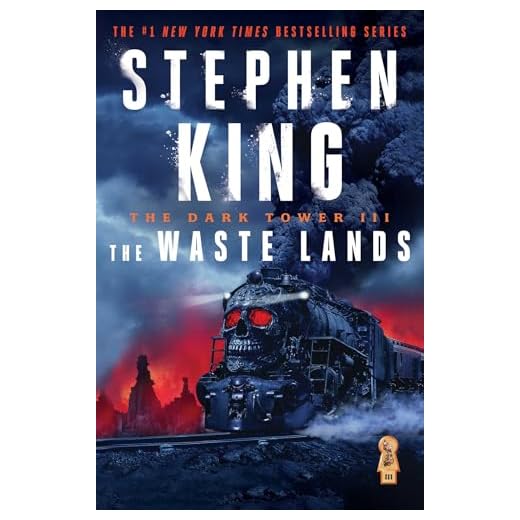
The Dark Tower III: The Waste Lands
$16.60
Amazon.com
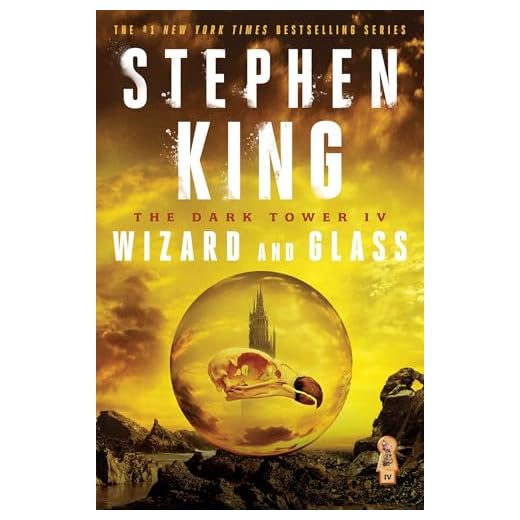
The Dark Tower IV: Wizard and Glass
$15.28
Amazon.com

The Dark Tower V: Wolves of the Calla (5) (Packaging may vary)
$13.79
Amazon.com

The Dark Tower VI: Song of Susannah (Dark Tower, The)
$11.87
Amazon.com
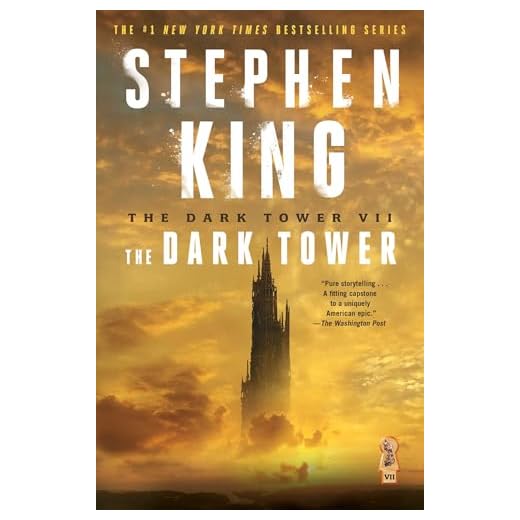
The Dark Tower VII: The Dark Tower
$13.28
Amazon.com
The Dark Tower Books in Chronological Order: The Best Reading Path
This version of The Dark Tower Books in Chronological Order keeps you on the “main quest” with the strongest pacing, cleanest reveals, and best emotional build.
1) The Gunslinger (Dark Tower I)
What it is: the doorway into Mid-World—short, strange, mythic, and intentionally withholding.
Roland Deschain is chasing the Man in Black across a desert. That’s the opening image that hooks many readers for life. The tone here is lean and dreamlike, closer to a legend than a modern thriller. You’ll meet Roland as a haunting figure—determined, relentless, and not always easy to like. That’s important: King wants you to feel Roland’s obsession, not just admire it.
You’ll also meet Jake Chambers, a boy from New York who becomes central to the series’ emotional core. Their relationship is one of the quiet engines of The Dark Tower—tender, complicated, and shadowed by fate.
This book sets the series’ language and metaphysics: ka, doors, worlds that echo ours, time that doesn’t behave, and the sense that the Tower isn’t a place so much as a gravitational force.
Why it matters in The Dark Tower Books in Chronological Order: it establishes the myth and the cost. Everything later is built on this foundation.
The Dark Tower I: The Gunslinger
2) The Drawing of the Three (Dark Tower II)
What it is: a hard pivot into momentum—more action, more character, more “okay, now we’re really doing this.”
This book begins shortly after The Gunslinger and throws Roland onto a surreal beach with three doorways. Each doorway opens into a different person’s life in New York, and the “drawing” is Roland assembling the companions he needs.
You meet Eddie Dean, sharp, funny, damaged, and unforgettable. You meet Odetta Holmes, whose story is layered and intense, eventually becoming Susannah Dean—one of King’s most complex creations.
This is where the series becomes addictive for many people. The pacing accelerates, the character dynamics lock into place, and the quest stops feeling like Roland’s private obsession and starts feeling like something larger—something with a team.
Why it matters in The Dark Tower Books in Chronological Order: this is the moment the ka-tet forms, and the emotional stakes become real.
The Dark Tower II: The Drawing of the Three
3) The Waste Lands (Dark Tower III)
What it is: the series expanding outward—bigger world, deeper mythology, higher risk.
Time has passed. Eddie and Susannah are being shaped into gunslingers, and Roland is paying the price for choices that bent reality. The story explores a brutal paradox: saving someone can break the world when the world’s rules are already fragile.
This installment pushes deeper into Mid-World, introducing places that feel both ruined and alive. You get the eerie city of Lud, the escalating danger, and the series’ iconic dose of “how is this both terrifying and weirdly funny?”
And then there’s Blaine the Mono, the kind of antagonist you don’t forget—because the threat isn’t just violence, it’s inevitability. The ending famously launches you forward like a train you can’t jump off.
Why it matters in The Dark Tower Books in Chronological Order: it cements the ka-tet as a functioning unit and raises the stakes from “quest” to “cosmic consequence.”
The Dark Tower III: The Waste Lands
4) Wizard and Glass (Dark Tower IV)
What it is: the heartbreaker. The myth deepens, and Roland becomes painfully human.
After surviving the fallout of The Waste Lands, the ka-tet finds itself in a warped, plague-scarred version of Kansas. But the core of this book is Roland’s long flashback to his youth in Hambry—his first love, his early understanding of betrayal, and the tragic shaping of the man he becomes.
You meet Roland’s old friends—Cuthbert and Alain—and you see him before the obsession fully calcifies. The romance with Susan Delgado is tender and doomed in that classic King way where you can feel fate tightening around the characters.
This installment does something crucial: it explains why Roland is the way he is. Not as an excuse—more like a witness statement.
Why it matters in The Dark Tower Books in Chronological Order: it’s the emotional anchor. Without it, Roland can feel too distant. With it, you understand exactly what the Tower has already stolen.
The Dark Tower IV: Wizard and Glass
5) Wolves of the Calla (Dark Tower V)
What it is: a western village defense story inside an epic quest—community, courage, and creeping dread.
Roland and his ka-tet arrive in Calla Bryn Sturgis, a community threatened by the “Wolves,” raiders who return periodically to steal the town’s children (or what comes back of them). The ka-tet becomes entangled in the Calla’s survival, and the series leans into themes of responsibility and leadership.
This book also widens the King-verse connection in meaningful ways, introducing threads that make longtime King readers grin and newcomers go, “Wait, what does that mean?” It’s a bridge between the “quest” and the broader multiverse implications.
Why it matters in The Dark Tower Books in Chronological Order: it shifts the story from traveling toward the Tower to confronting what the Tower’s war is doing to ordinary people.
The Dark Tower V: Wolves of the Calla (5) (Packaging may vary)
6) Song of Susannah (Dark Tower VI)
What it is: the pressure cooker. Fast, pivotal, and intentionally unsettling.
This is the penultimate volume, and it reads like the series inhaling before the final plunge. Susannah’s storyline becomes central, and the narrative moves across worlds with urgency and dread. This book is where the series’ weirdness becomes a feature, not a side effect—King leans into metafictional edges and moral discomfort.
For some readers, this is the most divisive installment; for others, it’s the glue that makes the finale land. Either way, it’s not skippable, and it’s not “filler.” It’s the hinge on which the ending swings.
Why it matters in The Dark Tower Books in Chronological Order: it sets up the final convergence—where everyone’s choices start cashing out.
The Dark Tower VI: Song of Susannah (Dark Tower, The)
7) The Dark Tower (Dark Tower VII)
What it is: the reckoning. Emotional, violent, strange, and—true to King—unafraid to challenge what readers want.
The ka-tet is scattered, regrouped, tested, and pulled toward the Tower with the force of destiny. This is where the mythic becomes personal again: the Tower isn’t just the universe’s lynchpin; it’s also Roland’s mirror.
Without spoiling what should remain unspoiled, the finale delivers what the series has always promised: endings and beginnings braided together, sacrifice that hurts, and revelations that force you to reconsider the entire journey.
This book doesn’t just answer questions. It asks you whether you were paying attention to the kind of story this always was.
Why it matters in The Dark Tower Books in Chronological Order: it completes the core quest—and leaves you with the kind of lingering aftertaste only a truly mythic series can.
The Dark Tower VII: The Dark Tower
Series Timeline & Character Development
If you only remember one thing about The Dark Tower Books in Chronological Order, make it this: the story is as much about people as it is about the Tower.
Roland Deschain: obsession, honor, and the cost of being “the last”
Roland begins as a figure of legend—cold, relentless, shaped by duty. Over the series, King peels him open layer by layer:
- the gunslinger code (and its cruelty)
- the human underneath the myth
- the way obsession disguises itself as purpose
- the way love can be both a weakness and a salvation
Reading The Dark Tower Books in Chronological Order lets you watch this transformation at the intended pace: you earn Roland’s humanity the hard way—through choices, consequences, and the slow accumulation of grief.
The Ka-Tet: Eddie, Susannah, Jake, and Oy
The heart of the series is the ka-tet:
- Eddie Dean grows from a witty survivor into a true gunslinger—still funny, still broken, but braver than he ever believed he could be.
- Susannah Dean is a triumph of complexity: strength, trauma, identity, and agency. Her arc is not comfortable, but it’s unforgettable.
- Jake Chambers embodies innocence without being naive. His bond with Roland is one of the most emotionally loaded relationships King has written.
- Oy (yes, Oy) becomes more than a companion—he becomes a symbol of loyalty so pure it can hurt.
The villains and forces: The Man in Black, the Crimson King, and “ka”
King’s antagonists aren’t just people—they’re pressures:
- temptation
- manipulation
- entropy
- cosmic decay
The Man in Black is not just a villain; he’s a storyteller of his own. The Crimson King is not just a final boss; he’s a symbol of the Tower’s war. And ka isn’t just fate; it’s the series’ heartbeat—sometimes comforting, often cruel.
Novels Sorted in Order of In-Universe Events
Here’s where the phrase The Dark Tower Books in Chronological Order gets tricky—because “chronological” can mean two different things.
Option A: Main-Quest Chronology (Best for first-time readers)
This is the same as the TL;DR order:
- The Gunslinger
- The Drawing of the Three
- The Waste Lands
- Wizard and Glass
- Wolves of the Calla
- Song of Susannah
- The Dark Tower
This is the version of The Dark Tower Books in Chronological Order that keeps the story coherent and emotionally escalating.
Option B: Strict “Life Timeline” Chronology (Not recommended first)
If you’re trying to place events in the rough order Roland lives them, you’ll be tempted to start with the backstory portions of Wizard and Glass. The issue is that Wizard and Glass is a framed flashback: it’s told at a specific point in the present-day quest for a reason.
So for strict timeline purists:
- Roland’s youth (Wizard and Glass flashback) happens “earlier,”
- but the experience of the series is best when you encounter that history exactly when King reveals it.
My professional (and very readerly) advice: if you want The Dark Tower Books in Chronological Order that feels best, choose Option A first, then play with Option B on rereads.
If you want more help deciding, our Reading Order FAQs are a lifesaver when you’re stuck between “timeline” and “author intent.”
Novels Sorted in Order of Publication
If you’re a publication-order reader (I often am, especially for big mythic series), here’s the clean publication sequence for the core seven—also a highly recommended version of The Dark Tower Books in Chronological Order for first-timers:
- The Gunslinger (originally published 1982; later revised edition exists)
- The Drawing of the Three (1987)
- The Waste Lands (1991)
- Wizard and Glass (1997)
- Wolves of the Calla (2003)
- Song of Susannah (2004)
- The Dark Tower (2004)
If you ever find yourself spiraling into “chronological vs publication,” the best quick explainer is our internal guide that breaks down both approaches and when each makes sense.
Companion Works
This is where The Dark Tower turns from “a seven-book series” into “a universe with gravitational pull.”
If you want The Dark Tower Books in Chronological Order as the core seven only, you can stop at book seven and be satisfied. But if you want the expanded experience, companion works add resonance—especially for certain characters and concepts.
The most common companion add-on: The Wind Through the Keyhole (Book 4.5)
Even though your series list is the core 7, many readers treat The Wind Through the Keyhole as essential optional reading. It’s typically placed between Wizard and Glass (Book 4) and Wolves of the Calla (Book 5) for the smoothest “quest rhythm.”
If you’re doing The Dark Tower Books in Chronological Order and you want the extra story without derailing momentum:
- Read it after Wizard and Glass and before Wolves of the Calla on a reread, or
- Save it for after the core seven if you don’t want to pause the main arc.
King-verse novels that tie in strongly (optional, but rewarding)
These aren’t required to follow The Dark Tower Books in Chronological Order, but they deepen themes and connections:
- ’Salem’s Lot (for a key character later)
- The Stand (for a major villain’s mythic footprint)
- Insomnia (for cosmic-level connections)
- Hearts in Atlantis (for certain “low men” threads)
- Everything’s Eventual (includes “Little Sisters of Eluria,” a Dark Tower-adjacent story)
Comics, concordances, and guides
- The Dark Tower comics (expanded mythology, visual storytelling; Robin Furth’s involvement is notable)
- The Dark Tower: The Complete Concordance (for readers who love lore, maps, and deep dives)
A fun extra: Discordia (2009 online game tie-in)
You included this in your source notes, and it’s worth mentioning as a “deep fandom” artifact. It’s a continuation-style experience focusing on Tet Corporation and Sombra/NCP conflict in New York, supervised by Stephen King and Robin Furth.
If you like your reading life to include bonus rabbit holes, companion works can turn The Dark Tower Books in Chronological Order into a full-year project.
Editions & Formats (Hardcover, Collector, Audio)
The good news: The Dark Tower is available in nearly every format imaginable. The better news: format genuinely changes the experience.
Paperback / Mass Market Paperback
- Great for budget reading and travel
- Mass market editions are portable but sometimes tight on text size
- If you’re binge-reading The Dark Tower Books in Chronological Order, paperbacks are easy to stack and annotate
Hardcover
- Ideal if you love the “epic saga on a shelf” feeling
- Some hardcovers include striking illustration work depending on edition
- Great for collectors who want the series to feel like a physical artifact
Illustrated Editions
You’ll see editions credited to illustrators (including Bernie Wrightson, Darrel Anderson, Michael Whelan). If you’re visual, these editions can make Mid-World feel more immediate—especially in scenes where the landscape is doing a lot of emotional work.
Audiobooks
If there is one format that can convert skeptical readers into Tower obsessives, it’s audio—especially if you commute or do long walks.
Audiobooks can make:
- Roland’s voice feel mythic
- Eddie’s humor land sharper
- the world’s odd phrases feel like oral tradition (which fits the series)
If you’re choosing audiobooks for The Dark Tower Books in Chronological Order, commit to the format consistently. Switching narrators mid-series can feel jarring, so try to keep your editions aligned.
-29%

Amazon.com
$114.72
$163.00
The Dark Tower 8-Book Boxed Set

Amazon.com
$89.22
Stephen King Dark Tower Collection 8 Books Box Set Pack (1 To 8) - Gunslinger

Amazon.com
$249.95
STEPHEN KING NEW COVER SERIES - THE DARK TOWER COMPLETE SET No. 21 thru 28. 1 of 500 (Artist Signed, Cover Only)
Why Read The Dark Tower Books in Chronological Order?
Because with The Dark Tower, order isn’t just organization—it’s emotional engineering.
Here’s why the core-seven “main quest” version of The Dark Tower Books in Chronological Order works so well:
1) The mythology is revealed in layers
King doesn’t dump the lore on you. He lets you feel it. You encounter ka, beams, doors, and the Tower itself in the exact rhythm that keeps the world mysterious without becoming confusing.
2) The ka-tet arc builds naturally
The relationships in this series are everything. The order shapes how you understand Eddie’s growth, Susannah’s complexity, Jake’s role, and Roland’s slow, painful (sometimes reluctant) humanity.
3) Wizard and Glass lands hardest at the right moment
Reading Wizard and Glass too early can flatten its impact. Reading it at book four makes it feel like you’ve earned the truth behind Roland—and you understand why the past matters now.
4) The final two books are a single descent
Books six and seven are designed like a tightening coil. Changing the order can interrupt that momentum, which is why I recommend the main quest order for nearly everyone asking for The Dark Tower Books in Chronological Order.
If you want to get even more strategic about reading series in general, we keep a running guide on habits that help you avoid spoilers and avoid abandoning series mid-way.
Author Spotlight: Stephen King
Stephen King is often introduced as “the horror guy,” but The Dark Tower is one of the best arguments that he’s really something broader: a storyteller obsessed with myth, America, morality, and the way ordinary people behave when the world tilts.
He’s written more than sixty books, many of them global bestsellers, spanning horror, thriller, fantasy, sci-fi, crime, and literary-leaning character studies. His voice is accessible without being simplistic, and his greatest strength—especially in a long series like this—is character.
The reason The Dark Tower Books in Chronological Order works as a reading project is because King can keep you attached to people even when the world goes surreal. He makes the strange feel human. He makes the myth feel personal.
And The Dark Tower, for many fans, is the centerpiece: an epic that swallows genres and then hands them back to you reshaped.
Media Adaptations (Films, TV, Radio)
Film: The Dark Tower (2017)
A feature film adaptation was released in 2017 starring Idris Elba (Roland) and Matthew McConaughey (Walter/The Man in Black). Reception was widely negative among fans and critics, largely because compressing a mythic, character-driven seven-book saga into a single film is… a tall order.
Television: Long development history
You included key development notes: Amazon pursued a series adaptation at one point and did not move forward; later, director Mike Flanagan announced in 2022 that he acquired rights with plans for a multi-season approach.
Because this is the kind of property that keeps cycling through adaptation attempts, it’s worth watching—but my evergreen advice remains the same: read The Dark Tower Books in Chronological Order first, so you experience the story at full power before any screen version changes the shape of it.
Other media
- Discordia (2009 online game tie-in)
- Comics and expanded works (often better at capturing the world’s scale than compressed screen adaptations)

The Dark Tower (2017)
FAQs
What is the best reading order for beginners?
For almost everyone, the best entry is the core-seven sequence—this guide’s main version of The Dark Tower Books in Chronological Order:
Gunslinger → Drawing → Waste Lands → Wizard and Glass → Wolves → Song → Dark Tower.
Can I start with Wizard and Glass because it’s earlier in Roland’s life?
I don’t recommend it. Wizard and Glass is a flashback told at a specific point in the journey. Starting there changes how you meet Roland and can dull the intended emotional reveal. If you want strict chronology, save that for a reread.
Do I have to read the companion books?
No. You can read The Dark Tower Books in Chronological Order as the seven core novels and feel complete. Companion books deepen the universe, but they’re optional.
Where does The Wind Through the Keyhole fit?
Most readers place it between Wizard and Glass and Wolves of the Calla (as “Book 4.5”). If you’re a first-time reader and you don’t want to interrupt momentum, save it for after book seven.
Is The Dark Tower horror?
It has horror elements, but it’s broader: dark fantasy, epic quest, sci-fi western, and mythic storytelling with horror DNA. If you like genre-blending, you’ll love it.
Should I read The Gunslinger revised edition or original?
If you’re new, the revised edition is often the smoother fit with the later books. If you become a Tower superfan, you can explore both versions for comparison.
Final Thoughts
If you’re committing to The Dark Tower Books in Chronological Order, you’re not just picking up a series—you’re stepping onto a road that keeps unfolding beneath your feet.
The seven-book core is a complete experience: mythic in scope, intimate in relationships, and bold in how it challenges what a “quest story” can be. Read it in the main quest order, let the world reveal itself in layers, and trust that the emotional punches land hardest when you don’t try to outsmart the structure.
Then, if the Tower gets its hooks into you (and it probably will), come back for the companion works and expanded King-verse connections. The story rewards obsession—ironically, fitting for a series about obsession.
Long days and pleasant nights.
-37%
Amazon.com
$9.96
$16.00
The Dark Tower I: The Gunslinger
-43%
Amazon.com
$11.38
$20.00
The Dark Tower II: The Drawing of the Three
-16%
Amazon.com
$16.60
$20.00
The Dark Tower III: The Waste Lands
-23%
Amazon.com
$15.28
$19.99
The Dark Tower IV: Wizard and Glass
-31%
Amazon.com
$13.79
$19.99
The Dark Tower V: Wolves of the Calla (5) (Packaging may vary)
-40%
Amazon.com
$11.87
$19.99
The Dark Tower VI: Song of Susannah (Dark Tower, The)
-36%
Amazon.com
$13.28
$20.99
The Dark Tower VII: The Dark Tower