Read every series in the right order
Our Top 8 Civil War Books On Amazon — We Recommend
Ready for cannon smoke, courtroom drama, and a few unforgettable letters? Which of these eight civil war books will change how you see the war?
History is not dead—it’s loud. The Civil War still argues with us.
Top Picks 8 Civil War Books
1
Definitive History
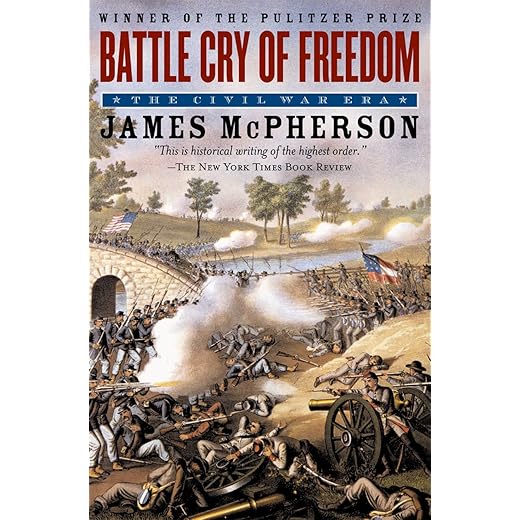
Battle Cry of Freedom — One-Volume History
Best single-volume Civil War history
9.7
Amazon.com
2
Pulitzer Winner
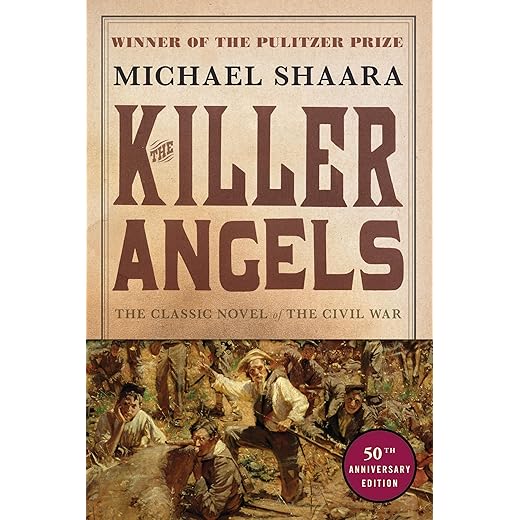
The Killer Angels — Gettysburg Novel
Best for immersive Gettysburg perspective
9.6
Amazon.com
3
Must-Read
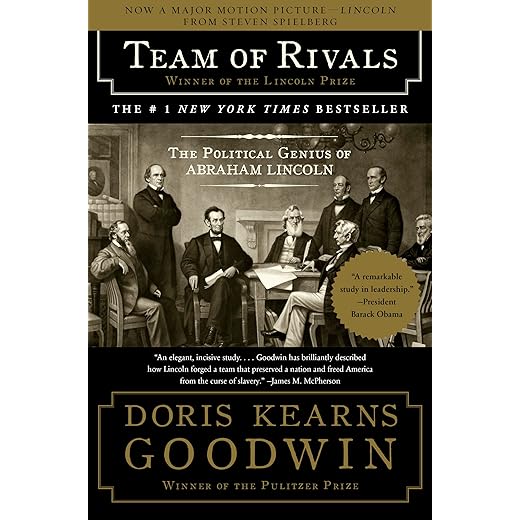
Team of Rivals — Lincoln Leadership Study
Best for understanding Lincoln's leadership
9.4
Amazon.com
4

Biography Masterpiece
Grant — Chernow's Definitive Biography
Best full-life portrait of Ulysses S. Grant
9
Amazon.com
5

Editor's Choice
The Demon of Unrest — Larson
Best for gripping pre-war narrative
8.8
Amazon.com
6

Eyewitness Accounts
Voices from Gettysburg — Eyewitness Collection
Best for firsthand Gettysburg perspectives
8.6
Amazon.com
7
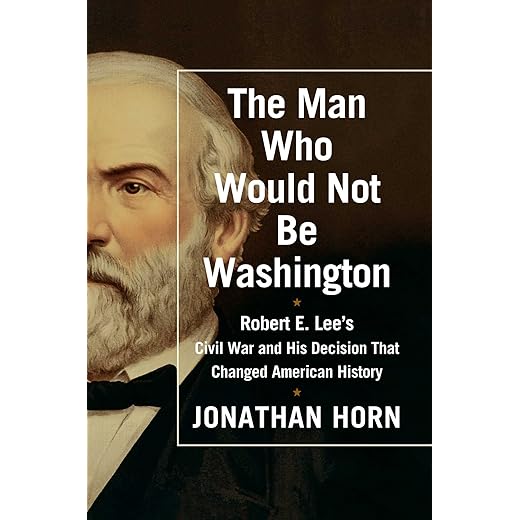
The Man Who Would Not Be Washington
Best for rethinking Lee and Washington ties
8.2
Amazon.com
8

Essential Primary Source
The Emancipation Proclamation — Gift Edition
Best for primary-source reading and gifting
7.5
Amazon.com
Definitive History
1
Battle Cry of Freedom — One-Volume History
Best single-volume Civil War history
9.7/10
EXPERT SCORE
We judge this as the most comprehensive single-volume synthesis of the Civil War era. The narrative integrates political, social, and military threads with scholarly clarity and readability.
Pros
Cons
Overview and scope
James McPherson's Battle Cry of Freedom is widely regarded as the standard one-volume history of the Civil War era. We value its ability to weave political events, military campaigns, and social change into a coherent narrative spanning two transformative decades. The book is particularly strong at explaining how slavery, politics, and national identity converged to produce the conflict and its outcomes.
Core features
Who should read it and how we use it
We recommend this volume as the first serious reference for anyone studying the Civil War: scholars often point to it as the baseline synthesis. Because of its length and depth, we use it as a foundation and supplement it with specialized monographs for topics (e.g., Reconstruction, naval warfare, or local studies) when deeper dives are needed.
Pulitzer Winner
2
The Killer Angels — Gettysburg Novel
Best for immersive Gettysburg perspective
9.6/10
EXPERT SCORE
We found this novel uniquely effective at placing readers inside commanders' minds during Gettysburg. The character-driven, battlefield storytelling delivers both tactical clarity and emotional depth.
Pros
Cons
Why this novel still matters
Michael Shaara's Pulitzer Prize–winning novel remains one of the most powerful literary treatments of the Battle of Gettysburg. We value its technique: alternating first-person viewpoints let readers live inside decisions made by leaders on both sides. The book balances vivid combat scenes with reflective passages that probe motivation and honor, which is why it inspired the film Gettysburg and continues to be assigned in classrooms.
What stands out in the writing
Practical readers' notes
We recommend this to readers who want to feel, not just learn, the battle. As a historical novel it takes liberties with interior monologue, so we pair it with a primary-source or analytic history if we need stricter documentary accuracy. For newcomers it often serves as an accessible entry point to the complexity of Civil War leadership and battlefield chaos.
Must-Read
3
Team of Rivals — Lincoln Leadership Study
Best for understanding Lincoln's leadership
9.4/10
EXPERT SCORE
We consider this an essential read for how political skill shaped wartime strategy. The multi-biography format illuminates Lincoln's talent for using rivals' strengths to preserve the Union.
Pros
Cons
Why we rely on this account
Doris Kearns Goodwin's Team of Rivals remains a go-to for readers wanting to understand Lincoln's political craft. We appreciate how the book traces Lincoln's relationships with Seward, Chase, Bates, and others to show how he turned competition into collaboration. The work's combination of biography and political narrative offers a lasting model of leadership under pressure.
Key strengths
How to read it
We recommend it for readers who want a leadership-focused interpretation of the presidency during war. It pairs well with tactical or military histories when readers want a full picture: use this for White House decision-making and another volume for campaign-by-campaign military narrative. Expect dense scholarship presented in an accessible narrative voice.
Biography Masterpiece
4
Grant — Chernow's Definitive Biography
Best full-life portrait of Ulysses S. Grant
9/10
EXPERT SCORE
We found a balanced, richly detailed portrait that reshapes common assumptions about Grant. The book excels at connecting military leadership, presidential challenges, and personal trials into a unified life story.
Pros
Cons
What makes this biography important
Ron Chernow offers a sweeping life of Ulysses S. Grant that repositions him beyond caricature. We appreciate how Chernow treats Grant as a complex figure — a determined soldier, a politically imperfect president, and a vulnerable private man. The narrative illuminates Grant's military genius and his contentious presidency, including efforts to protect freed people and the corruption scandals that stained his administration.
Highlights and methodology
Practical impressions
We recommend this to readers who want an authoritative life study rather than a short overview. The final chapters on Grant's memoirs and final years are especially moving; we often assign them to students studying veterans' memory and the politics of Reconstruction. Expect a long but rewarding read.
Editor's Choice
5
The Demon of Unrest — Larson
Best for gripping pre-war narrative
8.8/10
EXPERT SCORE
We found a focused, suspenseful account of the five months that carried the nation to Fort Sumter. The book blends lively storytelling with archival research to make a well-trod subject feel immediate and cautionary.
Pros
Cons
Why we recommend this book
Erik Larson turns the chaotic months between Lincoln's election and Fort Sumter into a tightly paced narrative. We appreciate how the author combines political maneuvering, personal drama, and archival detail to explain why a fragile nation tipped toward war. Larson foregrounds characters — military officers, secessionists, and civilians — so readers can understand the human temperature behind political choices.
Key features and approach
How we use and judge it
We turn to this book when we want a readable reconstruction of the immediate lead-up to the Civil War. While the narrative occasionally digresses into personal vignettes that some readers may find tangential, those digressions often illuminate broader cultural or social dynamics. For those seeking a concise cause-and-effect account, be prepared for rich contextual detail and layered character studies.
Eyewitness Accounts
6
Voices from Gettysburg — Eyewitness Collection
Best for firsthand Gettysburg perspectives
8.6/10
EXPERT SCORE
We found this collection invaluable for hearing the battle through contemporaneous voices. The day-by-day documents and rare letters bring immediacy and a diversity of perspectives missing from synthesized narratives.
Pros
Cons
Why primary voices matter
Allen C. Guelzo's compilation gathers letters, memoirs, and reports from participants and witnesses of Gettysburg. We value the way the material humanizes the clash: an artilleryman's terror, a surgeon's fatigue, a civilian's bewilderment. Such testimonies show the fog of war in real time — confusion, courage, and contradiction — and therefore are indispensable for readers who want the raw material of history.
What you'll find inside
How we use the book
We use this volume as a companion source when teaching or researching Gettysburg: the documents supply emotional texture and primary evidence that enrich interpretation. Because the collection prioritizes original voices over synthesis, we pair it with analytical histories for strategic or causal conclusions. For anyone seeking the battlefield's lived experience, these voices are an indispensable resource.
7
The Man Who Would Not Be Washington
Best for rethinking Lee and Washington ties
8.2/10
EXPERT SCORE
We found an illuminating exploration of how Robert E. Lee's personal and family ties to Washington shaped his choices. The book adds nuance to debates about Lee's motives by connecting personal legacy with national conflict.
Pros
Cons
What this study attempts
Jonathan Horn traces Robert E. Lee's decision to oppose the Union by situating him within the legacy of George Washington. We find this vantage useful because it links cultural inheritance, family ties, and individual conscience to large political decisions. Horn's approach reframes Lee's choice not merely as regional loyalty but as a conflicted response to competing legacies.
Strengths of the volume
How we recommend reading it
We recommend this for readers who want interpretive depth about Lee's motives rather than a blow-by-blow military narrative. For battlefield tactics or unit histories, pair it with a campaign-specific study. When teaching, we use it to provoke discussion about historical memory, allegiance, and how personal inheritance influences public choice.
Essential Primary Source
8
The Emancipation Proclamation — Gift Edition
Best for primary-source reading and gifting
7.5/10
EXPERT SCORE
We appreciate this edition as a concise, well-produced presentation of Lincoln's proclamation and drafts. It functions best as a primary-source teaching tool or a meaningful gift rather than a standalone interpretive history.
Pros
Cons
What this edition offers
This gift edition presents the draft, preliminary, and final versions of Lincoln's Emancipation Proclamation in a compact, well-printed format. We appreciate having the textual evolution in one place: seeing the changes illuminates both the legal posture and the political caution behind emancipation. For students and readers, it's a direct line to a pivotal presidential wartime measure.
Features to note
How we recommend using it
We use this edition as a primary-source supplement when teaching Lincoln, emancipation, or wartime constitutional measures. It is best paired with analytic works (for example, volumes on Lincoln's policies or on the Thirteenth Amendment) to understand legal limitations and political motivations. As a standalone, it powerfully conveys the rhetoric and legal form of a document that changed the meaning of the war, but readers seeking contextual analysis will want additional secondary sources.
Final Thoughts
We recommend Battle Cry of Freedom as our top pick if you want one authoritative, single-volume history that combines politics, society, and military action. Its strength is scope and synthesis: pick this for deep background reading, course prep, or to own a reference you’ll return to.
If you want to feel a battle rather than study one, choose The Killer Angels. Its character-driven narrative makes Gettysburg visceral and immediate. It’s ideal for battlefield tours, readers who prefer narrative fiction, or anyone who wants the emotional heartbeat behind strategy.
FAQ
Which book should a complete beginner start with?
Start with Battle Cry of Freedom. It gives a single, readable sweep of the entire war era so you understand the big picture before diving into specialized biographies or battlefield-firsthand accounts.
I love biographies—what should I read to understand Union leadership?
Team of Rivals is the best window into Lincoln’s political craft and how he managed talented opponents. For a full-life portrait focused on military and postwar challenges, read Grant by Chernow.
Which book will help me when I visit Gettysburg?
Read The Killer Angels for a vivid sense of commanders’ decisions and Voices from Gettysburg to hear the actual words of soldiers and civilians. Together they pair tactical clarity with firsthand immediacy—great for walking the field.
I want something short and focused on the lead-up to war. Any suggestions?
The Demon of Unrest by Larson is tight, suspenseful, and concentrates on the crucial months before Fort Sumter. It’s perfect when you want concentrated narrative energy rather than a multi-century survey.
Are any of these good as gifts or classroom primers?
Yes: The Emancipation Proclamation — Gift Edition works beautifully as a teaching artifact or a thoughtful present. For classroom use, Battle Cry covers the curriculum; Voices from Gettysburg provides primary sources students can analyze.
Which title will change the way I think about Robert E. Lee?
The Man Who Would Not Be Washington reframes Lee through personal and family ties to Washington. It won’t overturn all myths, but it adds nuance to questions of motive and legacy.