Read every series in the right order
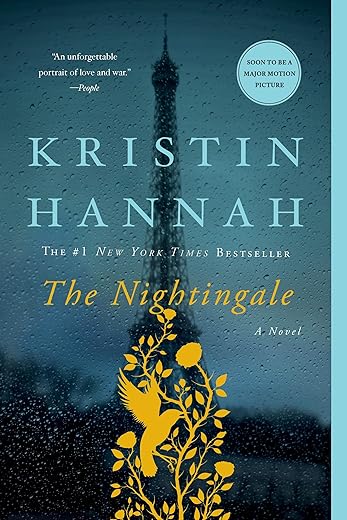
Our Comparison: The Nightingale vs The Great Alone
Which novel taught us more about survival, sacrifice, and the limits of love—and which one left us breathless?
Two unforgettable stories, one tough bookshelf decision—let’s sort it out. We compare Kristin Hannah’s THE NIGHTINGALE and THE GREAT ALONE, examining themes, characters, and reader appeal to help us decide which novel best fits our reading tastes and buying priorities.
Resistance Drama
Kristin Hannah's The Nightingale: WWII Sisterhood Novel

Amazon.com
We found the novel to be a meticulously crafted historical drama with strong character work and emotional resonance. Our reading experience was marked by vivid scenes and a steady narrative that honors both intimate moments and broader wartime events.
Wilderness Drama
Kristin Hannah's The Great Alone: Alaska Survival Novel

Amazon.com
We found the book to be a haunting, atmospheric novel that uses setting as a central character and delivers powerful emotional payoff. Our experience was marked by intense family drama and vivid descriptions that linger after the final page.
Hannah Nightingale Novel
Hannah Great Alone
Hannah Nightingale Novel
Hannah Great Alone
Hannah Nightingale Novel
Hannah Great Alone
1
Plot Summaries and Core Themes
The Nightingale — wartime resistance
We follow two French sisters, Vianne and Isabelle, as World War II upends their lives. Vianne endures occupation and makes agonizing choices to protect her daughter while a German officer lives in her home. Isabelle, young and impulsive, joins the Resistance, undertaking dangerous missions to save others. The novel traces their separate but interwoven paths through courage, sacrifice, and the costs of survival under Nazi occupation.
The Great Alone — survival and family drama
We enter 1970s Alaska with the Allbright family, who move off-grid seeking a new start after Ernt’s return from Vietnam. The landscape initially offers hope, but as winter and isolation intensify, Ernt’s volatile behavior threatens his wife Cora and teenage daughter Leni. The story focuses on intimate domestic danger and the struggle to endure both environmental harshness and escalating domestic violence.
Core themes at a glance
We identify overlapping and distinct thematic cores:
Scope, context, and emotional focus
We note clear contrasts: The Nightingale operates on a broad historical stage (occupied France, organized resistance), delivering sweeping moral stakes and public heroism. The Great Alone is intimate and psychological (rural Alaska, domestic peril), emphasizing environment-shaped tension and family breakdown. Both hit emotional depths, but The Nightingale leans toward communal sacrifice while The Great Alone centers on private survival and unraveling.
2
Characters, Relationships, and Emotional Impact
Protagonists and growth
We compare two very different central journeys. In The Nightingale, Hannah gives us two fully realized sisters—Vianne, who endures occupation with quiet moral choices, and Isabelle, who grows into a daring Resistance fighter. Their arcs are broad, heroic, and shaped by public danger. In The Great Alone, the focal arc is Leni’s coming-of-age against her father Ernt’s deterioration; that intimacy makes personal survival and psychological change the engine of the story.
Secondary figures and relationship dynamics
Secondary characters function differently in each book. The Nightingale populates a community—resistance fighters, occupied neighbors, and commanding officers—so relationships expand outward into networks of sacrifice and solidarity. The Great Alone tightens its focus to family bonds and the local Alaskan community, so relationships feel intense, immediate, and claustrophobic.
Narrative voice and emotional investment
We find The Nightingale’s voice sweeping and panoramic; alternating focal points encourage empathy for multiple lives and inspire admiration for public heroism. The Great Alone’s voice is closer, more atmospheric, and often chest-tightening—readers live inside Leni’s fear and hope.
3
Writing Style, Pacing, and Atmosphere
Prose and readability
We find Kristin Hannah’s prose in both novels clear and emotionally direct, but with different aims. The Nightingale uses polished, panoramic language—lyric when describing people and places, economical when moving action forward—so scenes read with cinematic clarity. The Great Alone favors denser, sensory prose that lingers on weather, smells, and the ache of isolation; it reads more interior and immersive.
Pacing and tension
We experience The Nightingale as more plot-driven: alternating perspectives, frequent set pieces, and escalating external stakes keep momentum high even when Hannah pauses for reflection. The Great Alone is a slow burn—Hannah allows tension to accumulate in long domestic scenes, then releases it in sharp eruptions. Both build suspense effectively, but they do so on different timetables.
Scene construction and techniques
We note contrast in scene construction: The Nightingale stitches together varied, often shorter scenes—raids, escapes, acts of resistance—that create urgency and forward motion. The Great Alone constructs extended, atmospheric chapters where environment and character psychology fuse, making small moments feel ominous. Hannah uses moral dilemmas and time pressure in The Nightingale versus isolation and psychological unraveling in The Great Alone to generate stakes.
Who will appreciate each stylistic approach
We recommend The Nightingale for pace-oriented readers and The Great Alone for those who savor mood and thick, sensory writing.
4
Practical Buyer Considerations: Editions, Formats, and Who Should Buy Which
Editions & formats
We find both novels available on Amazon in the same core formats: hardcover, trade paperback, audiobook, and Kindle/eBook. The Nightingale also appears in a movie-tie-in paperback and occasional special editions; The Great Alone has several paperback and audiobook reprints with different covers.
Pricing & value
Both titles offer strong value for their length and production quality. Current typical Amazon price points:
Extras and popular bonuses
Physical and digital editions commonly include extras that matter to book-club buyers and readers who like context:
Who should buy which
Side-by-Side Feature Comparison
Hannah Nightingale Novel vs. Hannah Great Alone
VS
Author
Kristin Hannah
VS
Kristin Hannah
Genre
Historical Fiction / WWII
VS
Contemporary Literary Fiction / Domestic Drama
Primary Setting
Occupied France (multiple towns)
VS
Rural Alaska (homestead)
Publication Year
2015
VS
2018
Page Count
Approx. 448 pages
VS
Approx. 448 pages
Approximate Price
$$
VS
$
Format Availability
Paperback, Hardcover, eBook, Audiobook
VS
Paperback, Hardcover, eBook, Audiobook
Central Themes
Courage, sacrifice, family, resistance
VS
Survival, trauma, family, resilience
Tone
Poignant, urgent, reflective
VS
Brooding, tense, lyrical
Adaptations
Film adaptation announced
VS
Film/TV option interest reported
Audiobook Narration
Professional full-cast / single narrator editions available
VS
Professional single narrator edition available
Language
English
VS
English
Publisher
St. Martin’s Press
VS
St. Martin’s Press
Final Verdict: Which Novel to Choose
We find a clear overall winner: The Nightingale. For readers seeking sweeping emotional historical drama, richly drawn characters, and sustained narrative momentum, we recommend The Nightingale as the stronger pick — its wartime stakes and emotional payoff make it the more universally resonant choice. If your priority is stark, immersive survival and family tension in remote Alaska, The Great Alone is still an excellent secondary option.
Use our framework: choose The Nightingale for emotional depth and historical weight; choose The Great Alone for raw atmosphere and survival-focused family saga. Ready to start reading? Which setting calls to you first? We often suggest pairing either novel with a book-club discussion to deepen the experience together.
1
Resistance Drama
Amazon.com
Kristin Hannah's The Nightingale: WWII Sisterhood Novel
2
Wilderness Drama
Amazon.com
Kristin Hannah's The Great Alone: Alaska Survival Novel