Read every series in the right order
Audiobooks Vs Ebooks Vs Print: Which Format Is Best for Your Reading Style?
Audiobooks vs ebooks vs print isn’t really a battle—it’s a matching game.
I used to think choosing a format was like choosing a team. Print people. Kindle people. Audio people. And then life happened: a packed commute, a tired season, a craving for deep focus, a week where my eyes refused to stare at another screen… and suddenly I wasn’t loyal to any format. I was loyal to the story—and to whatever helped me actually show up for it.
Because here’s the truth: format choice shapes how stories land. Print can feel like a ritual. Ebooks can feel like freedom. Audiobooks can feel like a secret doorway into reading time you didn’t know you had.
So if you’re asking, “Which is best?” I’m going to give you a better question:
“Which format fits my life right now—and how do I use it in a way that makes reading feel good?”
That’s what this guide is for.
Table of Contents
Key Takeaways (The “Tell Me Fast” Version)
- Print tends to shine when you want deep focus, slower immersion, and strong “where-was-I?” memory cues.
- Ebooks win for portability, instant access, adjustable text, and reading in awkward places (waiting rooms, lines, late-night bed-scrolling… but with books).
- Audiobooks are unbeatable for multitasking and movement—commuting, cleaning, walking, cooking—especially when your hands are busy.
- Retention depends on how you read/listen, not just the format. Print often supports detail recall; audio can work brilliantly when you’re attentive; ebooks can be amazing if you manage distractions.
- The best approach is often a mix: print for savoring, ebooks for convenience, audiobooks for “found” reading time.
Quick Comparison: Print vs Ebook vs Audiobook
| Feature | Ebooks | Audiobooks | |
|---|---|---|---|
| Best for | Deep focus, slow reading, study vibes | Travel, convenience, adjustable text | Busy days, movement, multitasking |
| Portability | Low to medium | High | High |
| Eye comfort | High (for most) | Adjustable, but still screen-based | Highest (eyes get a break) |
| Distraction risk | Low | Medium to high (device dependent) | Medium (mind can wander) |
| Annotation | Easy + satisfying | Powerful + searchable | Indirect (bookmarks/notes) |
| Immersion style | Tactile + visual | Visual + customizable | Voice-driven + emotional |
| Typical “best moment” | Quiet evening, weekend coffee | Commute, travel, bedtime | Dishes, gym, driving |
Keep that table in mind—but don’t stop there. Your reading style is more than features. It’s mood, environment, attention, and energy.
Why This Choice Matters More Than You Think
A story doesn’t enter your life the same way in every format.
- In print, the book has weight. Your hands remember how far you’ve traveled. Your brain builds a physical map.
- In ebooks, the story becomes fluid. Fonts shift, pages become percentages, and your entire library is suddenly… always with you.
- In audiobooks, the story becomes a presence. A voice. A companion. And sometimes (when the narrator is amazing), it becomes a performance that changes the book entirely.
And here’s the weirdly comforting part:
You don’t have to pick one forever.
Your best format can change seasonally:
- Busy period? Audio saves you.
- Travel month? Ebooks keep you reading.
- Burnout? Print might bring you back to slower, calmer focus.
So instead of choosing “the best,” we’re going to choose “the best for you.”
Understanding Your Reading Habits (Start Here)
Before you buy anything, subscribe to anything, or declare yourself “an audiobook person now,” take five minutes and answer these honestly.
1) When do you actually read?
Not when you wish you read. When you really read.
- In bed?
- On commutes?
- During lunch breaks?
- Weekend mornings?
- While doing chores?
If most of your reading time happens when your hands are full or your body is moving, audiobooks may be your lifeline. If your reading time is quiet and seated, print or ebooks might be easier to stay present with.
2) What steals your focus?
Be real. We all have “focus thieves.”
- Notifications?
- Open tabs?
- Loud environments?
- Tiredness?
- Restlessness?
If your biggest enemy is your phone, ebooks can be tricky (unless you use a dedicated e-reader). If your biggest enemy is mental wandering, audiobooks might require a more intentional listening setup.
3) What does your body need?
Reading is physical—eyes, posture, migraines, wrist comfort, sleep hygiene.
- Eye strain?
- Headaches?
- Wrist pain holding heavy hardcovers?
- Trouble sleeping after screens?
Audiobooks can be a relief when your eyes are done. Ebooks can be a relief when you need bigger text. Print can be a relief when screens fry your brain.
4) What kind of books are you reading?
Format choice can change depending on the type of book.
- Dense fantasy with worldbuilding and maps?
- Mystery with lots of names and clues?
- Romance you want to inhale?
- Nonfiction you want to retain?
Some genres naturally “feel” better in certain formats (we’ll get into that).
5) What’s your main reading goal right now?
This is the core question.
- Do you want to read more?
- Do you want to read deeper?
- Do you want to read with less stress?
- Do you want to retain what you read?
- Do you want reading to feel like comfort again?
Your goal decides the format—not the internet’s opinions.
The Tangible Appeal of Print (Why Paper Still Wins Hearts)
Let’s talk about the obvious thing first: print books feel like books.
And yes, that matters. There’s something about holding a paperback with worn edges or opening a hardcover that makes you feel like you’re entering a place—not just consuming text. Print reading has this quiet gravity to it. It’s slower in the best way.
What print does best
1) It creates a ritual
Print books don’t just contain stories—they create a moment around them.
- The “one more chapter” with a blanket
- The coffee shop read
- The dog-eared pages
- The stack on your nightstand that feels like an identity
A ritual makes reading more likely to happen. And it makes it feel meaningful when it does.
2) It supports deep focus
A physical book doesn’t ping you. It doesn’t tempt you with a quick scroll. It doesn’t turn into email if you lose your willpower.
Print reading is naturally single-tasking.
If you’re trying to rebuild your attention span (or just give your brain one quiet thing), print is powerful.
3) It helps many readers retain details
This is one of the biggest reasons people swear by print: it’s easier to remember where you read something, what page it was on, and how the book “felt” at that moment.
A print book gives your brain location cues:
- left page vs right page
- top of page vs bottom
- early in the book vs near the end
Those cues can make details stick.
4) It’s easier to flip, skim, and re-find
If you love re-reading scenes, checking maps, scanning footnotes, or jumping back to a name you forgot, print is effortless.
No menus. No searching. Just flip.
Why print can be frustrating (be honest)
Print is wonderful… but it’s not always practical.
- It’s heavier.
- It takes up space.
- It’s not instant (unless you’re near a bookstore).
- It can be awkward in tight spaces or while traveling.
- Small font can be a dealbreaker.
Print is the best format when your life has room for it.
Print is perfect for…
- readers who love slow immersion
- students or note-takers
- readers who struggle with screen distraction
- complex books (history, classics, dense fantasy)
- bedtime reading if screens keep you awake
My favorite print hack
If you want the focus of print but you struggle with “getting started,” keep one physical book in the place you already relax.
- beside the couch
- on the kitchen table
- by your bed
Make it the easiest option. Make it visible. Print thrives on being right there.
Portability & Accessibility: Why Ebooks Are Quietly Brilliant
Ebooks get reduced to “convenient,” but that’s only the surface.
For many readers, ebooks are the difference between reading happening… and not happening at all.
Because ebooks remove friction:
- no carrying weight
- no running out of book mid-trip
- no waiting for shipping
- no “I forgot my book”
Your library becomes available in any spare moment.
What ebooks do best
1) A whole library in your pocket
This is the obvious win, but it’s still magical.
If you read multiple genres, mood-read, or like having options, ebooks are incredible. You can carry:
- your current read
- your next read
- a comfort reread
- something light for when you’re tired
- something intense for when you’re focused
All at once.
2) Customization that helps you actually read
Ebook features can be more than gimmicks. They can be accessibility tools.
- Larger font = less eye strain
- Line spacing = easier tracking
- Dark mode = gentler nighttime reading
- Built-in dictionary = smoother reading flow
- Highlighting + searchable notes = amazing for nonfiction
If print is your love language, ebooks are your reading assistant.
3) Instant access
This is huge for anyone who reads in bursts.
If you finish a book at 11:30 pm and you’re the kind of person who needs the next one, ebooks are the only format that doesn’t make you wait.
4) Great for travel and public spaces
Ebooks are underrated for this: they’re private.
Reading a spicy romance in public? Ebook.
Reading something that makes you cry on the train? Ebook.
Reading something you don’t want anyone asking about? Ebook.
The biggest ebook problem: distraction
Let’s be real—ebooks are only as good as the device you read on.
- Dedicated e-readers = usually calm, focused, book-only
- Phone/tablet apps = can be chaos
If you’re reading ebooks on your phone and constantly getting pulled away, it’s not a “you” problem. That’s the device doing what it was designed to do.
Ebooks are perfect for…
- travel and commuting
- readers who need adjustable text
- budget-conscious readers (sales, deals, library options)
- night readers who want gentle lighting
- people who like highlighting and searching notes
My favorite ebook hack
If you want ebooks but your phone steals your attention:
- put your reading app on the last screen page
- turn on Focus/Do Not Disturb while reading
- set a 15-minute “ebook sprint” timer
You’re not trying to read for hours. You’re trying to make reading easy to begin.
The Multitasking Advantage of Audiobooks (Reading While Living)
Audiobooks are the format that makes people say, “I didn’t realize I could read this much.”
And I get it. Because audiobooks don’t ask you to sit still. They slide into the life you already have.
- commuting
- walking
- cleaning
- cooking
- folding laundry
- gym sessions
- long drives
- mindless tasks that need your hands, not your brain
Audiobooks turn those moments into story time.
What audiobooks do best
1) They create reading time out of nowhere
If your biggest struggle is “I never have time to read,” audiobooks are the most practical solution.
Instead of competing with life, they ride alongside it.
2) They can deepen emotional connection
A great narrator can completely transform a book.
- humor lands harder
- heartbreak feels sharper
- tension builds like a thriller soundtrack
- characters gain personality in a new way
For certain books—especially dialogue-heavy stories—audio can feel like the “director’s cut.”
3) They can help certain readers focus
This surprises people, but for some readers (especially those who struggle with restlessness), moving while listening is better than sitting still with a page.
Walking + audiobook can become a focus ritual.
The biggest audiobook problem: wandering attention
If you’ve ever listened for 15 minutes and suddenly realized you don’t know what happened… welcome to being human.
Audiobooks require a different kind of attention. They work best when your body is busy but your mind is available.
Audiobooks can struggle when:
- you’re doing tasks that require language (writing, emails, studying)
- you’re in loud environments without good headphones
- you’re exhausted and drifting
Audiobooks are perfect for…
- busy parents
- commuters
- people rebuilding a reading habit
- readers who love performance and narration
- anyone who wants to read more without adding more “sit down time”
My favorite audiobook hack
If you struggle with focus, pair audio with a repeatable activity:
- walking the same route
- doing the same chore routine
- driving a familiar commute
When your body doesn’t need to think, your mind stays with the story.
Retention, Focus, and How Your Brain Feels in Each Format
Let’s talk about the thing people argue about the most:
“Do audiobooks count?”
“Do you retain as much?”
“Is digital worse for your brain?”
Here’s the answer I actually care about:
Retention is less about format and more about attention
If you read print while half-asleep, you’ll forget it.
If you listen to audio while fully engaged, you’ll remember it.
If you read ebooks while checking notifications, your brain won’t store much.
So rather than saying “print always wins,” I’d frame it like this:
- Print supports attention naturally because it’s harder to multitask.
- Ebooks can be deeply focused on a distraction-free device.
- Audiobooks can be highly memorable when you listen actively.
Where each format tends to shine
Print: strongest for complex details
Print is ideal for:
- intricate worldbuilding
- nonfiction with stats, names, dates
- books you want to annotate
- anything you want to “study” rather than just experience
Ebooks: strongest for flow + convenience
Ebooks are ideal for:
- long series reading (easy to keep going)
- traveling reads
- bedtime reads with adjustable light
- reading in small pockets of time
Audiobooks: strongest for narrative momentum
Audiobooks are ideal for:
- thrillers and mysteries (the pace pulls you)
- memoirs (especially narrated by the author)
- romance (dialogue comes alive)
- rereads (you already know the plot, so wandering isn’t fatal)
Quick retention boosts for each format
If you read print:
- underline one sentence per chapter
- write a 1-line “what just happened?” note on a sticky tab
If you read ebooks:
- highlight character introductions
- use searchable notes for recurring names/places
- keep brightness low at night to avoid fatigue
If you listen to audio:
- use bookmarks when something feels important
- replay the last minute if your attention slips
- increase speed slightly if slow narration makes you drift (or decrease if it feels rushed)
Accessibility and Comfort: The Format That Makes Reading Possible
This part matters more than people admit.
Sometimes format isn’t preference. It’s access.
If you deal with eye strain or migraines
- Audiobooks can be a lifesaver.
- E-ink ereaders often feel gentler than phones/tablets.
- Print can be easier than backlit screens—unless the font is too small.
If you need larger text
Ebooks win here. Being able to increase font size instantly can make reading feel welcoming again.
If you have dyslexia or visual processing challenges
Different people respond differently, but ebooks can help with:
- font choice
- spacing
- line length
- background color
Audiobooks can help by removing the visual load entirely.
If you struggle with ADHD or restlessness
This can go either way:
- Print can be grounding and calming.
- Audiobooks can work beautifully if paired with movement.
- Ebooks can be tough if the device is distracting—unless it’s an e-reader.
The “best” format is the one that reduces friction for your brain.
Cost, Ownership, and the “Do I Really Own This?” Question
Let’s be practical for a minute.
Print costs and benefits
Pros:
- resale and lending
- collecting and gifting
- no battery, no apps, no lockouts
Cons:
- can be expensive new
- takes space
- buying series in print adds up fast
Ebook costs and benefits
Pros:
- frequent deals
- instant access
- no physical clutter
Cons:
- device costs
- not always shareable
- digital ownership can feel complicated depending on platform
Audiobook costs and benefits
Pros:
- massive value if you listen often
- libraries can be amazing for audio
- perfect for long books (big payoff)
Cons:
- can be pricey to buy outright
- subscription models vary
- narrator quality can make or break the experience
If budget is your main concern, you don’t need a “best format.” You need a plan:
- buy print for favorites
- use ebooks for deals and travel
- use audio strategically for busy seasons
Making the Right Choice: A Personal Format Roadmap
Here’s the roadmap I recommend (and use myself):
Step 1: Choose your “default” format
This is the format you’ll return to most often.
Ask: Which format makes reading easiest to start?
- If it’s print, keep a physical book visible in your space.
- If it’s ebooks, make your device distraction-free.
- If it’s audio, pair it with a daily routine.
Step 2: Choose your “support” format
This is what you use when life shifts.
Examples:
- Print reader → uses audio for commute
- Ebook reader → uses print for deep weekends
- Audio reader → uses ebooks for nights when the narrator isn’t working for them
Step 3: Build a “format menu” for moods
Instead of one rule, make a menu:
- When I’m tired: audiobook or large-font ebook
- When I want deep immersion: print
- When I’m traveling: ebook
- When I’m cleaning: audiobook
- When I’m stressed: comfort reread in whichever format feels easiest
Step 4: Match format to your environment
- noisy café → ebooks (or audio)
- quiet home → print
- bright outdoors → print or e-ink
- bedtime → print or dim ebook
Step 5: Permission to rotate
This is the part people forget.
You can switch formats without “cheating.”
You can change your mind mid-book.
You can be a hybrid reader and still be a real reader.
Reader “Types” (Find Yourself Here)
Sometimes it helps to see yourself in a simple archetype.
The Ritual Reader
You love the ceremony of reading.
- Best fit: Print
- Backup: ebook for travel
The Pocket Library Reader
You want options everywhere.
- Best fit: Ebooks
- Backup: audio for busy days
The Multitasker
You live in motion.
- Best fit: Audiobooks
- Backup: ebooks for quiet nights
The Deep Diver
You want to remember everything.
- Best fit: print (or distraction-free ebooks)
- Backup: audio for rereads
The Comeback Reader
You’re returning after a slump.
- Best fit: whichever format removes friction
- Usually: audio + ebooks for quick wins, print for comfort
No type is better. They’re just different doors into the same room.
Format-Friendly Recommendations (with Ratings + Who They’re For)
Best in Print (deep focus, atmosphere, complexity)
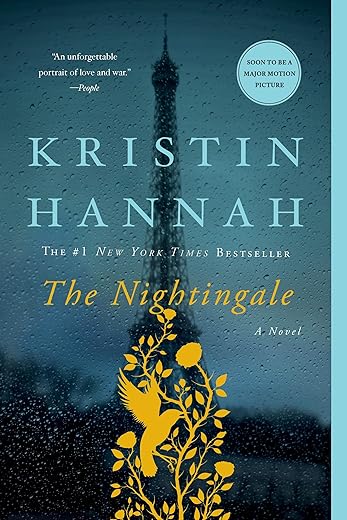
1) The Nightingale — Kristin Hannah
Short blurb: Two sisters in WWII France fight to survive in very different ways—one through quiet endurance, the other through resistance. It’s emotional, immersive, and heartbreakingly human.
Why read it (in print): This is a book many readers want to sit with. Print helps you slow down and absorb the emotional weight.
Why not: If you’re in a fragile mood, this can hit hard. Also: it’s not a “quick” book emotionally.
For whom: Historical fiction lovers, character-driven readers, book club readers.
Rating: Goodreads 4.65 average (2,047,588 ratings).
(We also reviewed it here: The Nightingale – Review From BICO
2) Dune — Frank Herbert
Short blurb: Politics, prophecy, ecology, and survival collide on Arrakis—the desert planet that controls the most valuable substance in the universe.
Why read it (in print): Dense world-building + lots of terminology. Print makes it easier to flip back and orient yourself.
Why not: If you prefer fast pacing and minimal setup, the opening can feel slow.
For whom: Epic sci-fi readers, world-building lovers, patient readers.
Rating: Goodreads 4.29 average (1,612,768 ratings).
Series guide: Dune Complete Reading Guide
3) A Game of Thrones — George R.R. Martin
Short blurb: Noble houses collide in a brutal fight for power, and nobody is safe—not even the characters you love most.
Why read it (in print): Multiple POVs + intricate politics = print helps you stay grounded and remember who’s where.
Why not: It’s long, intense, and not exactly a comfort read.
For whom: Fantasy readers who love politics, morally complex characters, high stakes.
Rating: Goodreads 4.45 average (2,710,810 ratings).
4) The Shining — Stephen King
Short blurb: A family becomes winter caretakers of an isolated hotel—and the place is not empty. Psychological dread builds until it breaks.
Why read it (in print): Horror hits differently when you control the pace and feel the silence around the pages.
Why not: If you’re sensitive to addiction themes, violence, or intense dread—choose carefully.
For whom: Horror readers, suspense lovers, slow-burn tension fans.
Rating: Goodreads 4.28 average (1,691,232 ratings).
Series/guide: The Shining Complete Reading Guide
Best as Ebooks (bingeable, fast switching, easy lookup)
5) Ready Player One — Ernest Cline
Short blurb: A virtual-reality treasure hunt in a dystopian future, packed with pop-culture references and high-speed challenges.
Why read it (as an ebook): It’s propulsive and bingeable—perfect for phone/tablet bursts and late-night “just one more chapter.”
Why not: If the nostalgia references aren’t your thing, it may feel gimmicky.
For whom: Gamers, pop-culture lovers, fast-paced sci-fi readers.
Rating: Goodreads 4.23 average (1,291,056 ratings).
Reading order guide: Ready Player One Complete Reading Guide
6) Mistborn: The Final Empire — Brandon Sanderson
Short blurb: A heist story in a world where ash falls from the sky—and magic is powered by metals.
Why read it (as an ebook): Easy to carry, easy to binge, and ebook search helps with names/terms as the magic system deepens.
Why not: If you prefer lyrical prose over plot-driven storytelling, it may feel straightforward.
For whom: Fantasy readers who love clever magic systems, plot twists, and series momentum.
Rating: Goodreads 4.49 average (953,352 ratings).
Series guide: Mistborn Complete Reading Guide
7) Six of Crows — Leigh Bardugo
Short blurb: A crew of criminals attempts an impossible heist in a dangerous city—where secrets are currency and loyalty is fragile.
Why read it (as an ebook): Binge pacing + fast POV shifts work well on an e-reader where you can read anywhere.
Why not: If you want a slower, more introspective fantasy, it’s more plot-forward.
For whom: YA/NA fantasy fans, heist lovers, character ensemble readers.
Rating: Goodreads 4.46 average (1,141,052 ratings).
Guide: Six of Crows Complete Reading Guide
8) The Hunger Games — Suzanne Collins
Short blurb: Katniss Everdeen is thrown into a televised fight to the death—and becomes something the Capitol didn’t expect: a symbol.
Why read it (as an ebook): This is peak binge-reading—fast chapters, cliffhangers, late-night “how is it 2 a.m.?” energy.
Why not: Heavy themes, violence, and emotional intensity—especially for younger readers.
For whom: YA dystopia fans, fast-paced readers, anyone coming back from a reading slump.
Rating: Goodreads 4.35 average (9,808,804 ratings).
Best as Audiobooks (performance matters, memoir shines, full-cast energy)
9) Project Hail Mary — Andy Weir
Short blurb: A man wakes up alone in space—with no memory—and realizes he might be humanity’s last chance.
Why read it (in audio): This story has pacing and humor that absolutely pops when performed.
Why not: If you want to pause and analyze every scientific detail, print/ebook may feel easier.
For whom: Sci-fi readers, thriller pacing lovers, people who want a “movie in your head.”
Rating: Goodreads 4.50 average (1,053,385 ratings).
10) The Martian — Andy Weir
Short blurb: An astronaut is stranded on Mars and must science his way back to survival—while cracking jokes to stay sane.
Why read it (in audio): The humor and tension stay alive when narrated well, making it ideal for commutes.
Why not: If you dislike technical problem-solving, it may feel “mathy.”
For whom: Sci-fi fans, problem-solving readers, anyone who loves resilient protagonists.
Rating: Goodreads 4.42 average (1,274,643 ratings).
11) Born a Crime — Trevor Noah
Short blurb: A memoir about growing up mixed-race in apartheid South Africa—funny, sharp, and unexpectedly moving.
Why read it (in audio): Memoirs often hit hardest when the voice is personal and immediate.
Why not: Some themes are heavy (racism, violence, trauma), even with humor woven in.
For whom: Memoir readers, nonfiction fans, listeners who want heart + insight + laughs.
Rating: Goodreads 4.49 average (798,763 ratings).
12) Daisy Jones & The Six — Taylor Jenkins Reid
Short blurb: A fictional oral history of a 1970s rock band—fame, love, addiction, music, and a breakup everyone still talks about.
Why read it (in audio): Oral-history style + multiple voices = audiobook gold.
Why not: If you prefer traditional narration and plot-forward structure, it can feel “interview-y.”
For whom: Fans of character drama, music stories, “behind the scenes” storytelling.
Rating: Goodreads 4.20 average (1,828,036 ratings).
FAQs: Audiobooks vs Ebooks vs Print
Is it better to read digitally or in print?
It depends on your goal. If you want fewer distractions and deeper slow reading, print often feels better. If you want convenience and adjustable text, ebooks can be a perfect everyday format.
Which is better: an ebook or an audiobook?
If you want control over pacing and visuals, ebooks usually win. If you want to read while doing other things, audiobooks are unbeatable. Many readers use both depending on the day.
Is it better for your brain to read or listen?
Reading visually often supports stronger detail tracking for many people, especially with complex material. Listening can be just as meaningful when you’re attentive—especially for story-driven books. The key factor is focus, not purity.
What format should audiobooks be in?
From a listener’s perspective, the best audiobook “format” is one with clear audio quality, consistent volume, and narration that matches the tone of the book. (If the voice doesn’t work for you, it’s okay to switch—narrator fit matters.)
Can I switch formats mid-book?
Absolutely. Plenty of readers read a chapter in ebook at lunch, listen on the drive home, and pick up the print copy at night. Your goal is finishing—and enjoying—not following rules.
Final Thoughts (And the Real Answer)
Print, ebooks, and audiobooks each fit a different rhythm of life.
- Print is the slow-burn, deep-focus ritual.
- Ebooks are the flexible, portable, always-ready option.
- Audiobooks are the “found time” miracle for busy days.
The best choice isn’t one winner. It’s a mix that changes with your schedule, energy, and mood.
So if you’re stuck choosing, try this:
Pick the format that makes reading easiest this week. Not the format you think you should prefer. The one you’ll actually use.
That’s the format that keeps stories in your life—and that’s the whole point.