Read every series in the right order

Reading Development: The Ultimate Guide for Ages 6–12
Table of Contents
Quick Answer (TL;DR)
Reading Development (ages 6–12) isn’t just about leveling up reading skills—it’s about protecting reading joy while kids’ brains, emotions, and independence grow fast. The biggest pivot often happens around age nine, when “reading for fun” tends to drop. The fix isn’t forcing harder books—it’s finding the right match of interest + ability so reading feels like a clear signal instead of static.
If you remember one thing: the “right” book turns a child into a self-described reader.
Introduction: Why Reading Development Gets Hard (Right When You Think It Should Get Easier)
I used to think reading development was mostly a staircase: kids learn letter sounds, then short sentences, then chapter books, and eventually—boom—lifelong reader.
But if you’ve spent real time with kids between 6 and 12, you already know it’s not a staircase. It’s more like hiking trails. Sometimes it’s smooth. Sometimes it’s steep. Sometimes you take a wrong turn and end up in a patch of frustration that makes a child declare:
“I hate reading.”
That line can feel like a punch in the stomach—especially if you’re a parent or teacher who genuinely loves books. And here’s the part I want to say gently: it doesn’t mean you failed. It often means the book match is off. Not the child.
One of my favorite ways to explain reading development at this age is the “radio” analogy you shared—because it’s painfully accurate:
Finding the right book for a nine-year-old is like tuning a radio.
If the frequency (reading level) is slightly off, all the child hears is static and frustration. But when interest and ability align, the signal comes through clear and powerful—turning a silent room into a world of music and story.
This guide is built to help you “tune the dial” without overthinking it. We’ll walk through:
- why age nine is such a make-or-break moment
- how formats (graphic novels, audiobooks, illustrated chapters) fit into reading development
- what kids tend to want at each grade level
- how to match theme/genre to the child in front of you
- and how to build a home or classroom culture where reading isn’t a school task—it’s a life habit
And if you want a companion read after this: our practical post on raising readers without pressure is a great add-on—especially for bedtime routines, reluctant readers, and family habits. (See our guide with parent-friendly reading-with-kids tips.)
I. The Critical “Age Nine” Window
1) The “Reading for Fun” Decline
Across classrooms and households, many parents notice a pattern: around age nine, something shifts. Kids who once devoured books start drifting away. They still can read—but they don’t want to.
Why? Because reading development isn’t only cognitive. It’s also:
- identity (“am I the kind of kid who reads?”)
- autonomy (“I choose what I like”)
- stamina (“can I hold attention through longer plots?”)
- emotion (“can I handle complicated feelings in stories?”)
- social belonging (“does reading fit who my friends are?”)
When reading feels too hard, too babyish, or too disconnected from what matters to them, kids don’t just lose interest. They quietly decide: “Reading isn’t for me.”
That’s why the “right book” matters so much. A single series can flip the identity switch from “I don’t read” to “I’m a reader.”
2) The Literacy Pivot: “Learning to Read” → “Reading to Learn”
Around this stage, reading development hits a new demand: kids are expected to read to learn information, follow multi-step directions, and process more complex narratives.
The tricky part? School reading often becomes more demanding at the exact moment a child wants more control. If we respond by tightening the screws (“You must read this exact thing”), we may win compliance—but lose joy.
The goal is to support the pivot without turning books into homework.
3) Cognitive Milestones (Ages 9–12)
Between 9 and 12, kids typically develop:
- larger vocabularies
- better logic and cause/effect reasoning
- longer attention spans (when interest is high)
- deeper emotional processing (especially social dynamics, fairness, loyalty, identity)
That means reading development is ready for bigger stories. But it also means kids need stories that feel relevant:
- friendships that change
- the first taste of “I don’t fit”
- rules that feel unfair
- courage that looks like speaking up, not slaying dragons
- humor that feels “older kid,” not preschool
This is where you win the year. Not with harder books. With better matches.
II. Categorizing Books by Format and Reading Level
One of the fastest ways to support reading development is to stop thinking in “good books vs bad books” and start thinking in formats that meet kids where they are.
Here’s a practical breakdown.
Illustrated Chapter Books (Transition Powerhouse)
Best for: visual learners, kids leaving picture books, kids who need momentum
Why it works for reading development: illustrations reduce cognitive load and increase comprehension, while text quietly expands vocabulary.
Examples:
- Diary of a Wimpy Kid
- Dog Man
These are not “lesser” reading. They’re bridge books—and bridges matter.
Easy Reader Chapter Books (Confidence Builders)
Best for: kids who can decode but get tired quickly; kids building speed
Why it works: big fonts, short sentences, familiar patterns—without feeling like baby books.
Examples:
- Magic Tree House
- Junie B. Jones
Middle-Grade Novels (The “Real Reader” Identity Shift)
Best for: kids ready for 200–400 pages, deeper plots, emotional growth
Why it works: middle-grade novels often land right in the sweet spot of reading development—bigger stakes, but age-appropriate perspective.
Examples:
- Percy Jackson
- Nevermoor
Graphic Novels and Memoirs (The Six-Star Secret Weapon)
Best for: reluctant readers, visual thinkers, kids who want fast payoff
Why it works: graphic novels often provide a “six-star experience”—high engagement, strong humor/emotion, and a finished-book dopamine hit.
Examples:
- Mexikid
- Smile
- Amulet
If a child inhales graphic novels, they’re still practicing:
- narrative structure
- inference
- dialogue
- vocabulary
- pacing
That’s reading development—full stop.

Amazon.com
$50.00
Diary of a Wimpy Kid 12 Books Complete Collection Set New(Diary Of a Wimpy Kid,Rodrick Rules,The Last Straw,Dog Days,The Ugly Truth,Cabin Fever,The Third...
-44%

Amazon.com
$42.87
$77.94
Dog Man: The Supa Epic Collection: From the Creator of Captain Underpants (Dog Man #1-6 Box Set)

Amazon.com
$38.00
Koblit ltd Percy Jackson Collection 7 Books Set (Lightning Thief, Sea of Monsters, Titan's Curse, Battle of the Labyrinth, Last Olympian, Greek Heroes, Greek...

Amazon.com
Nevermoor Paperback Gift Set
-26%

Amazon.com
$86.99
$118.91
Amulet #1-9 Box Set
-27%

Amazon.com
$43.43
$59.90
Junie B. Jones Bestest Box Set Ever (Books 1-10)
Audiobooks (The “Access” Format)
Best for: reluctant readers, dyslexic learners, kids who can understand above their decoding level
Why it works: audiobooks build language, comprehension, and story stamina—even when print feels hard.
One of the best reading development tricks is paired reading:
- child follows along in print while listening
- stop occasionally to talk about what’s happening
- let the audiobook do the heavy lifting so the child can fall in love with story again
If you want help choosing formats without guilt, we have a whole breakdown of audiobooks vs ebooks vs print—and how to pick what actually fits your child and household.
III. Grade-Level Progressions and Pathways (2nd–6th Grade)
Reading development moves fastest when kids experience success + enjoyment. Here’s a simple pathway you can use as a guide (not a rule).
2nd Grade (Age 7–8): Fluency and Fun
What kids often need: repetition, humor, shorter wins
What they often love: pets, mystery-lite, silly stakes, friendships
Examples:
- Owl Diaries
- A to Z Mysteries
Parent/teacher move:
Create a “two-book rhythm”—one easy win + one slightly challenging book. Momentum matters.
3rd Grade (Age 8–9): Quirky Characters and Independence
What changes: kids want to feel like they’re choosing
What they often love: weird villains, school chaos, cliffhangers
Examples:
- The Bad Guys
- Wayside School
Reading development tip:
Let them abandon books faster. The faster they’re allowed to quit, the faster they find what clicks.
4th Grade (Age 9–10): The Bridge Year
This is the heart of the age-nine window.
What kids want: “I’m not a little kid” books
What they need: books that don’t overwhelm
Examples:
- Wonder
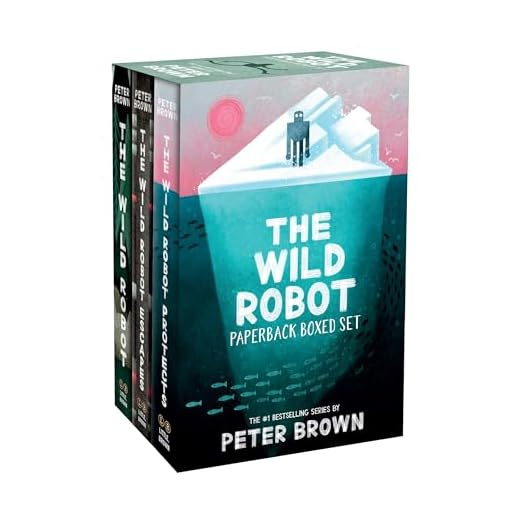
- The Wild Robot
The danger:
Adults often push a “classic” that’s too slow, too dense, or too emotionally distant. Kids interpret that as: “Reading is boring.” It’s not boring—it’s mistuned.
5th Grade (Age 10–11): Light Fantasy + Identity Themes
What opens up: imagination plus self-discovery
What works: magic systems, hidden talents, found family, courage arcs
Examples:
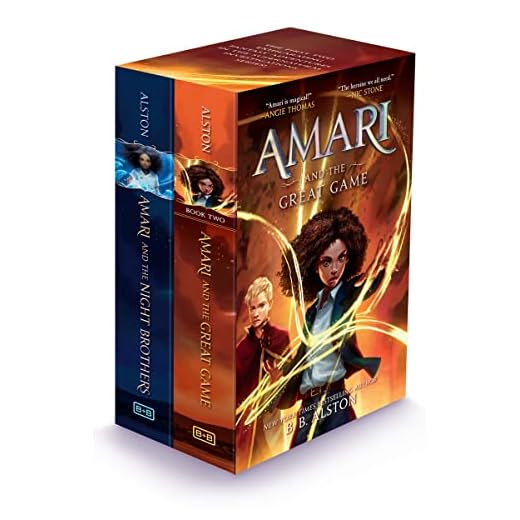
- Amari and the Night Brothers
- Fablehaven
Reading development tip:
This is where series can create “marathon reading.” One book ends, the next is waiting. That continuity builds stamina without effort.
6th Grade (Age 11–12): Morality, Global Viewpoints, Deeper Bonds
What changes: kids can handle nuance
What they often want: fairness, justice, identity, belonging, “real” stakes
Examples:
- Refugee
- Ghost
- A Wrinkle in Time
Adult move that helps:
Ask one question after reading:
“What would you have done if you were the character?”
That one prompt turns reading development into empathy development.
-10%

Amazon.com
$62.99
$69.99
Owl Diaries Collection 1-18 Books Box Set By Rebecca Elliott (Eva's Treetop Festival, Eva Sees a Ghost, A Woodland Wedding, Eva and the New Owl, Warm Hearts...
-50%

Amazon.com
$89.99
$181.74
A to Z Mysteries Boxed Set: Every Mystery from A to Z!
-43%

Amazon.com
$16.94
$29.95
The Bad Guys Box Set: Books 1-5
-23%

Amazon.com
$30.74
$39.96
The Wayside School 4-Book Box Set: Sideways Stories from Wayside School, Wayside School Is Falling Down, Wayside School Gets a Little Stranger, Wayside...
-54%
Amazon.com
$16.79
$36.98
Amari 2-Book Hardcover Box Set: Amari and the Night Brothers, Amari and the Great Game (Supernatural Investigations)
-31%
Amazon.com
$18.37
$27.00
The Wild Robot Paperback Boxed Set
IV. Thematic Deep Dives: Matching Interest to Genre
If you want reading development to stick, match who the child is (or wants to be) to a genre “doorway.”
Action & Modern Adventure
Best for kids who: need speed, love missions, get bored easily
Try:
- Addison Cooke
- City Spies
Why it helps reading development: fast pacing creates stamina before the child even notices.
Fantasy & Myth
Best for kids who: want escape, love world-building, crave “specialness”
Try:
- Wings of Fire
- Harry Potter
- Skandar
This is a huge identity engine: kids don’t just read fantasy—they join it.
Thought-Provoking Drama (Realistic Fiction)
Best for kids who: are sensitive, thoughtful, observant, empathetic
Try:
- Before the Ever After (brain injury themes)
- Beyond the Bright Sea (orphanhood themes)
These books can deepen reading development by giving kids language for feelings they couldn’t name.
Survival & Nature
Best for kids who: like challenge, outdoors, “how would I survive?” thinking
Try:
- Hatchet
- My Side of the Mountain
This genre often hooks reluctant readers because it feels like a mental game.
Humor & Social Relatability
Best for kids who: want to laugh, hate “serious” books, love school-life chaos
Try:
- Big Nate
- The Baby-Sitters Club
Humor is not fluff. Humor is glue. Humor keeps kids reading long enough for reading development to compound.
-50%

Amazon.com
$22.19
$44.95
Wings of Fire Boxset, Books 1-5
-47%

Amazon.com
$52.62
$100.00
Harry Potter Paperback Box Set (Books 1-7)
-25%

Amazon.com
$42.67
$56.99
The Skandar Collection (Boxed Set): Skandar and the Unicorn Thief; Skandar and the Phantom Rider; Skandar and the Chaos Trials
V. Strategic Guidance for Parents and Educators
This is where reading development becomes practical. Not perfect—practical.
1) The Series Advantage (Marathon Reading)
Series are the cheat code for reading development because:
- the world is already familiar
- the character voice is already learned
- the child wants to know what happens next
- finishing feels easier (because “I know this kind of book”)
If you want a curated set of series that tend to work well at this age, our roundup of the best series for 10-year-olds is a quick shortcut.
2) Vetting for Content (Without Fear-Reading)
Kids deserve independence—but adults deserve peace of mind.
A balanced approach:
- skim reviews for content flags
- ask librarians for “readalike” suggestions
- rely on trusted imprints or lists your family likes
- if you use “wholesome” filters (you mentioned publishers like Bakken Books), treat them as one tool, not the only tool
The goal isn’t to remove every hard topic. The goal is to match hard topics to readiness.
3) Balancing Challenge vs. Frustration (The 5-Finger Rule, Grown-Up Version)
The classic “five-finger rule” (one finger for each unknown word on a page) can help—but it’s not enough.
For reading development, watch for these signals:
Too hard (static):
- child avoids reading
- frequent rereading without understanding
- tense body language
- “I don’t get it” after every paragraph
Too easy (boredom):
- child finishes but doesn’t care
- “nothing happens” complaints
- drifting away mid-book
Just right (clear signal):
- child reads voluntarily again tomorrow
- they talk about characters like real people
- they ask to buy/borrow the next one
4) Expert Sourcing: Librarians + Kid-to-Kid Recommendations
The fastest “tune” for reading development is a recommendation from:
- a librarian who knows your child’s vibe
- a teacher who knows their stamina
- another kid who says, “This was so good.”
If you’re stuck, try the “three doors” method:
- Pick one book that matches their hobby
- Pick one book that matches their favorite movie/game
- Pick one book that matches their personality (funny, brave, sensitive, curious)
VI. Digital Integration and Media Tie-ins
(Some ideas here reflect broader trends and family anecdotes; use your judgment and verify independently.)
If a child is deep in screens, don’t start by fighting screens. Start by bridging.
Gamified Reading (Minecraft, Pokémon, etc.)
For reading development, themed books can function like training wheels:
- they lower resistance
- they keep attention
- they create a habit loop (“I like this universe, so I’ll read in it”)
Once the habit is strong, you can ladder into longer fiction.
From Screen to Page (Adaptations as a Spark)
If a child loves a show or movie, use it:
- “Want to see the original story?”
- “Want the version with more details?”
- “Want to read ahead?”
Examples you mentioned:
- The Baby-Sitters Club
- How to Train Your Dragon
Interactive Formats (Choose-Your-Own Adventure, Collectible Editions)
For reading development, interactivity gives kids a sense of control—especially helpful in the age-nine autonomy wave.
Ideas:
- choose-your-own adventure
- pop-up or collectible editions
- puzzle mysteries
- “letters/journals” style storytelling (feels like discovering a secret)
VII. Creating a Sustainable Reading Environment
(These are environment-based strategies; results vary by child—use what fits your home/classroom.)
1) Social Reading Habits
Tweens crave social connection. Reading development accelerates when reading becomes social, not solitary.
Try:
- buddy reading (same book, two kids)
- a “book snack” club (15 minutes + snacks + one question)
- sibling read-aloud time (older reads to younger and vice versa)
2) The Home Library Ecosystem
A reading environment is not only novels.
For reading development, include:
- nonfiction (animals, sports, space, inventions)
- comics and magazines
- poetry (short wins!)
- joke books (seriously—joke books build fluency)
A “mixed shelf” tells a child: Reading is not one narrow thing.
3) Modeling Behavior (Quietly, Not as a Lecture)
If a kid never sees adults read for pleasure, reading feels like a kid chore.
The simplest reading development strategy is:
- keep a book where they can see it
- read in common spaces
- say one sentence occasionally: “This part is so good.”
No sermon. Just culture.
A Simple Reading Development Toolkit (Checklists + Scripts)
Here are tools you can actually use tonight.
The 10-Minute “Right Book” Tune-Up
- Ask: “Do you want funny, scary, or adventurous?”
- Ask: “Do you want real life or magic?”
- Ask: “Do you want pictures or no pictures?”
- Offer two choices, not twenty
- Let them quit after 20 pages with no shame
The “Reluctant Reader” Script (That Doesn’t Start a Fight)
Instead of: “You need to read.”
Try:
“I want you to find one book that feels fun again. Let’s test two together.”
The “Series Stack” Method
- Borrow 3–6 books from the same series at once
- Put them in a visible pile
- The child reads “the next one” before deciding whether they like reading as a whole
This works because reading development thrives on momentum.
The “Two-Lane Reading Diet”
Lane A: comfort reads (easy wins)
Lane B: stretch reads (slightly harder)
Kids keep confidence while leveling up.
FAQs
What if my child only reads graphic novels?
That still counts as reading development. Graphic novels build comprehension, inference, vocabulary, and narrative skill. Use them as a bridge, not a battleground.
What if my child is “behind” grade level?
Focus on confidence + consistency first. A child who reads daily at an easier level often improves faster than a child who battles frustration and quits.
Are audiobooks “cheating”?
No. Audiobooks support reading development by building language, vocabulary, and story understanding—especially when paired with print.
How do I handle book abandonment?
Give permission. Abandoning the wrong book is often the fastest path to the right one—especially around age nine.
What’s the single best thing I can do this week?
Create one predictable reading ritual: 10 minutes, same time, same spot, with a book the child actually likes. Consistency beats intensity.
Final Thoughts
Reading development between ages 6 and 12 is less about pushing kids up a ladder and more about keeping the signal clear.
Especially around age nine, you’re not just choosing books—you’re shaping identity. You’re helping a child decide whether reading is:
- something they do for school
- or something they do for themselves
When the match is right, reading becomes a place kids go—not a task they avoid. And once that identity flips (“I’m a reader”), everything gets easier: vocabulary, empathy, attention span, writing skills, confidence.
So if you’re in the messy middle right now—if the dial feels off—don’t panic. Tune again. Try a different format. Try a series. Try humor. Try a graphic memoir. Try an audiobook.
Because reading development isn’t fragile. It just needs the right frequency.
Diary of a Wimpy Kid 12 Books Complete Collection Set New(Diary Of a Wimpy Kid,Rodrick Rules,The Last Straw,Dog Days,The Ugly Truth,Cabin Fever,The Third...
$50.00
Amazon.com
Dog Man: The Supa Epic Collection: From the Creator of Captain Underpants (Dog Man #1-6 Box Set)
$42.87
Amazon.com
Koblit ltd Percy Jackson Collection 7 Books Set (Lightning Thief, Sea of Monsters, Titan's Curse, Battle of the Labyrinth, Last Olympian, Greek Heroes, Greek...
$38.00
Amazon.com
Nevermoor Paperback Gift Set
Amazon.com
Amulet #1-9 Box Set
$86.99
Amazon.com
Junie B. Jones Bestest Box Set Ever (Books 1-10)
$43.43
Amazon.com
Owl Diaries Collection 1-18 Books Box Set By Rebecca Elliott (Eva's Treetop Festival, Eva Sees a Ghost, A Woodland Wedding, Eva and the New Owl, Warm Hearts...
$62.99
Amazon.com
A to Z Mysteries Boxed Set: Every Mystery from A to Z!
$89.99
Amazon.com
The Bad Guys Box Set: Books 1-5
$16.94
Amazon.com
The Wayside School 4-Book Box Set: Sideways Stories from Wayside School, Wayside School Is Falling Down, Wayside School Gets a Little Stranger, Wayside...
$30.74
Amazon.com
Amari 2-Book Hardcover Box Set: Amari and the Night Brothers, Amari and the Great Game (Supernatural Investigations)
$16.79
Amazon.com
The Wild Robot Paperback Boxed Set
$18.37
Amazon.com
Wings of Fire Boxset, Books 1-5
$22.19
Amazon.com
Harry Potter Paperback Box Set (Books 1-7)
$52.62
Amazon.com
The Skandar Collection (Boxed Set): Skandar and the Unicorn Thief; Skandar and the Phantom Rider; Skandar and the Chaos Trials
$42.67
Amazon.com