Read every series in the right order
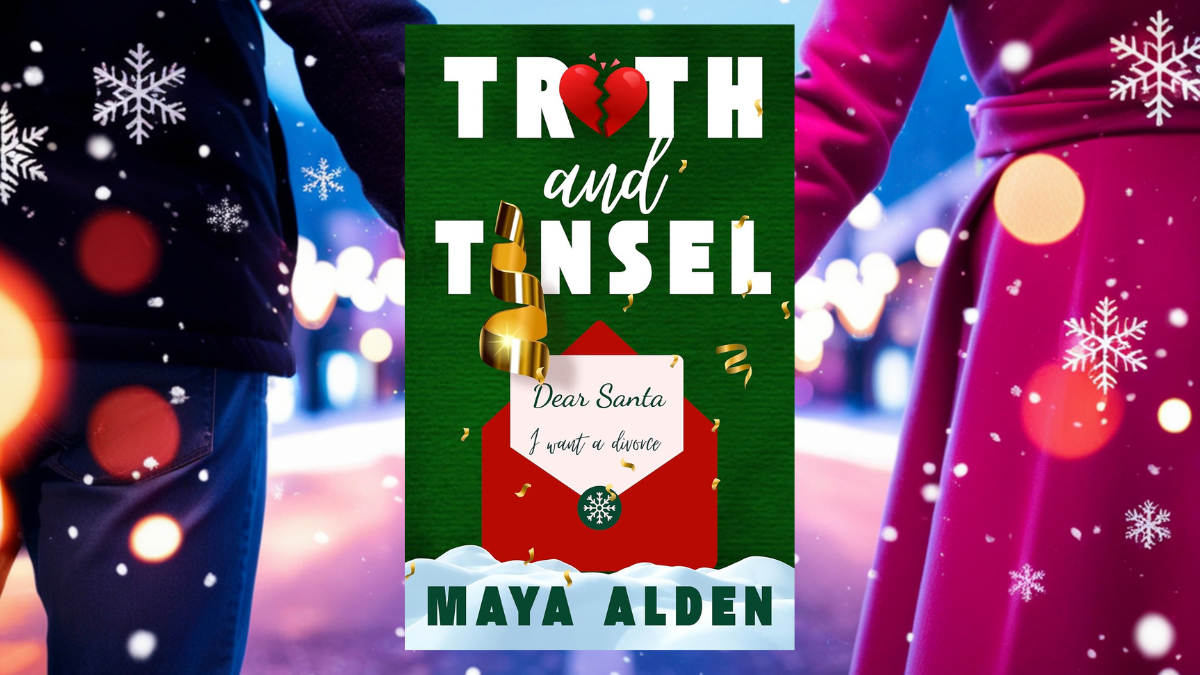
Truth and Tinsel by Maya Alden Arrives as a High-Emotion Marriage-in-Crisis Romance for the Holiday Season
December 17, 2025 brought a new entry to the “marriage-in-crisis” romance shelf—and it’s already resonating with readers who like their holiday stories messy, emotional, and intensely cathartic.
Truth and Tinsel: A Marriage In Crisis Romance by Maya Alden is built around one bold premise: a wife who has finally stopped begging for love—and a husband who realizes too late what he’s about to lose.
In a market full of cozy Christmas romances and low-stakes festive fluff, Truth & Tinsel takes a different lane. This is a holiday book with teeth: betrayal (a witnessed kiss), toxic family dynamics, other-woman drama, and a scorched-earth heroine who chooses her dignity over staying silent.
The headline moment that’s already being quoted by readers? Mia Winter doesn’t put a sweet gift under the tree. She puts divorce papers, wrapped with a bow.
And then she leaves.
That decision kicks off the book’s core engine: a wife who refuses to settle for scraps, and a husband who has to do more than apologize—he has to prove he deserves a second chance.
What to Know Right Now
- Title: Truth and Tinsel: A Marriage In Crisis Romance
- Author: Maya Alden
- Release date: December 17, 2025 (paperback)
- Reader reception: 4.7/5 on Amazon (202 ratings); 4.2 on Goodreads (1,026 ratings)
- Genre lane: Contemporary romance (holiday backdrop)
- Relationship outcome: HEA between the main couple
- Major tropes: Marriage in Crisis, Betrayal & Grovel, Other Woman Drama, Holiday Romance
- Content note: The hero shares a kiss with another woman (witnessed by the heroine)
Table of Contents
Key Takeaways
- Truth & Tinsel positions itself as a marriage-in-crisis romance with a holiday setting, not a light seasonal rom-com.
- The book leans hard into emotional payoff, including “scorched-earth” consequences and extended grovel.
- The conflict includes a witnessed kiss with another woman, which is clearly flagged as a trigger/content warning.
- A major story thread centers on toxic family pressure and class-based belittling, adding social tension beyond the romantic conflict.
- The novel is a complete standalone with a happy ending for the main couple—ideal for readers who want reconciliation, not a new love interest.
The Big Picture: Why This Holiday Romance Is Getting Attention
Holiday romance usually promises comfort: warm lights, second chances, a small-town bakery, maybe a snowstorm that forces proximity. Truth & Tinsel keeps the “second chances” part, but it does not soften the emotional edges.
Instead, it taps into a trend that’s been gaining momentum in contemporary romance: high-emotion, high-justice relationship stories where the heroine doesn’t quietly endure—and the hero has to sweat to earn his way back.
This is the kind of book that appeals to readers who want:
- accountability (not just regret),
- consequences (not just a speech),
- and a heroine who chooses herself first.
The holiday setting amplifies the stakes. Christmas isn’t just a backdrop here—it’s the pressure point. It’s the season of family expectations, public togetherness, and “keeping the peace,” which makes Mia’s decision to leave hit harder.
And in classic romance fashion, the moment she stops begging is the moment he finally sees what he’s losing.
The Premise: Divorce Papers Under the Tree
Mia Winter has spent six years loving her husband, Aiden—trying to fit into a world that never truly made room for her. She’s put in the work, made compromises, and kept showing up for a marriage that, increasingly, feels like it’s built on her effort alone.
Aiden, weighed down by family expectations and the demands of his world, makes a mistake—one Mia witnesses.
This is a key point: the betrayal isn’t vague. It isn’t rumor. It isn’t something she “misunderstood.” It’s something she sees with her own eyes.
So this Christmas, she’s done.
Instead of gifts, she puts divorce papers under the tree. Wrapped. Bow included. A statement so clear it doesn’t require a conversation first.
Then she leaves—taking her broken heart, her dignity, and (as the blurb makes sure we understand) a chunk of his fortune with her.
That last detail matters because it signals something about tone: Mia isn’t leaving quietly. She isn’t leaving politely. She’s leaving in a way that says, “You don’t get to erase what you did and keep everything you benefited from.”
And that sets up the second half of the hook: Aiden only realizes how much he loves her as she walks away.
Now he wants a second chance.
But the book’s promise is that he won’t get it through a single apology. He’ll have to earn it—through effort, humility, and sustained change.
Characters and Conflict: The Marriage, the Family, and the “Work Wife” Pressure Cooker
Mia Winter: A Heroine Who Finally Stops Shrinking
Mia’s appeal is straightforward and powerful: she is done. Not done in the “dramatic threat” way—done in the steady, exhausted way that happens after years of being overlooked.
Her arc is built around:
- self-respect,
- boundaries,
- and the kind of courage that doesn’t look loud at first—but becomes unstoppable once it starts moving.
Readers who love “woman finds her backbone” storylines will recognize the energy here: Mia isn’t asking permission to leave. She is choosing herself, even though it hurts.
Aiden: The Man Who Realizes Too Late
Aiden’s role fits the classic romance redemption setup: he has been blind (or willfully distracted), and the cost of that blindness becomes unbearable once Mia is gone.
But the book frames that blindness through specific pressures:
- his family expectations,
- his business responsibilities,
- and the presence of another woman—especially in a professional setting.
This is the kind of hero some readers love and some readers avoid. The difference often comes down to one question:
Does the story make him truly earn redemption—or does it excuse him?
The early reader reaction suggests the book is aiming for the first: heavy consequences, heavy grovel, and a heroine who doesn’t hand forgiveness out like a stocking stuffer.
The “Other Woman” Dynamic: Drama with a Clear Boundary
The book includes other-woman drama and infidelity (a kiss)—explicitly stated and flagged.
Based on the reader comment included in the original post, the “other woman” is positioned as someone who has returned and is working her way into Aiden’s life with significant support from his family.
That adds a layered conflict:
- it’s not just “a woman makes a move”;
- it’s “a woman is enabled by a system that already doesn’t respect the wife.”
Which leads directly to one of the book’s most emotionally loaded themes…
The Real Villain Energy: Toxic Family Expectations and Class Pressure
One reason marriage-in-crisis romances hit so hard is that they often show how a relationship doesn’t collapse from one moment—it collapses from a thousand cuts.
In Truth & Tinsel, those cuts include family dynamics that appear to be:
- controlling,
- status-driven,
- and openly dismissive of Mia.
The reader comment specifically highlights belittling tied to social class and the pain of being treated as “not enough,” including the strain of fertility issues (or at least the pressure and cruelty around pregnancy/children). That kind of conflict can intensify the emotional stakes significantly because it expands the core question from:
“Will he choose her?”
to
“Will he protect her?”
and
“Will he finally place their marriage above his family’s approval?”
When the heroine is constantly disrespected, the grovel must be more than romantic—it must be structural. It has to include real choices and real boundaries.
This is exactly the kind of storyline that keeps readers turning pages, especially those who love:
- protective heroes (once they wake up),
- powerful confrontations,
- and “the family doesn’t get to run this marriage anymore” moments.
Tropes and Reading Experience: What This Book Promises (and What It Doesn’t)
Featured romance tropes
Truth & Tinsel is clearly marketed with tropes that have strong reader communities:
- Marriage in Crisis: established couple, relationship breaking point
- Betrayal & Grovel: wrongdoing + extended redemption arc
- Other Woman Drama: external pressure testing the marriage
- Holiday/Christmas: seasonal setting heightening emotion and stakes
- Standalone + HEA: complete resolution, happy ending for the main couple
If you’re the kind of reader who searches tropes first (no judgment—many of us do), this book is positioning itself in a very specific comfort zone: hurt, fallout, revenge energy, and reconciliation.
Trigger warning and content note
The book is explicit about a key plot element:
Top Rated

Second Chance Romance at Solara Vineyards
Incredible tale of love and betrayal
This gripping romance explores love, betrayal, and the fight to save a family legacy amidst personal turmoil. Can Elena and Marcus rebuild their shattered trust while saving their winery from disaster?
The hero shares a kiss with another woman, witnessed by the heroine.
That matters because this is a “dealbreaker trope” for many romance readers. Some readers love the intensity of betrayal-and-repair arcs. Others find any form of cheating or near-cheating too painful to enjoy in fiction.
The author note also clarifies something important: this is not a “heroine finds someone new” romance. This is a reconciliation story. If you read romance primarily for “the heroine upgrades her life with a new man,” this won’t match your preferred arc.
But if you read romance for the emotional payoff of:
- a heroine reclaiming power,
- a hero realizing what he did,
- and a hard-earned reunion,
then this is exactly in that lane.
Early Reader Response: Why the “Scorched Earth” Hook Works
The included Amazon review comment reads like a love letter to the genre’s most satisfying emotional beats: the heroine hits her limit, the family gets called out, and the divorce-papers scene becomes a memorable highlight.
That’s worth noting because it tells us what readers are praising most:
- the heroine’s backbone
- the “scorched earth” decision
- the emotional pain portrayed realistically
- the satisfaction of consequences
In other words, the early buzz isn’t just “this was cute.” It’s “this was cathartic.”
And catharsis is a major reason readers return to marriage-in-crisis stories. They’re not always “comfortable,” but when they’re done well, they deliver a sense of emotional justice that’s hard to forget.
Why This Release Fits the Current Romance Landscape
Romance readers are savvy. They know what they like, and they know what they don’t. And lately, there’s been increasing demand for books that deliver:
- higher emotional intensity
- clear accountability
- a heroine who doesn’t accept crumbs
- an ending that feels earned, not rushed
Truth & Tinsel aligns with that demand by presenting Mia as someone who stops negotiating for basic respect—and by placing the burden of repair where it belongs: on the person who broke trust.
The holiday framing also works strategically:
- The season intensifies relationship strain (family gatherings, traditions, expectations).
- The imagery (tree, gifts, togetherness) amplifies the symbolism of divorce papers.
- It positions the story as both timely and re-readable: a “holiday angsty romance” for readers who want something different than cozy.
Where This Fits on Books in Chronological Order
At Books in Chronological Order, we tend to think in two reading modes:
- Comfort reads (easy-to-digest, low-stress)
- Emotional investment reads (high stakes, high payoff)
Truth & Tinsel is firmly in the second category.
If you’re building a romance TBR and want more author-focused guidance, you may also enjoy browsing similar contemporary relationship-driven voices. Here’s a good starting point for that style: Carola Lovering
And if you prefer your romance a bit lighter (or simply want something cozy and familiar between heavier books), revisiting a beloved YA romance series can be a great palate cleanser: To All the Boys I’ve Loved Before Books in Chronological Order – Complete Reading Guide
Finally, if you’re cost-conscious this season and want to explore romance and holiday reads without overspending, this guide can help you keep your reading budget friendly: How to Get Free Books on Kindle
About the Author: Maya Alden
Maya Alden is a Top 5 Amazon bestselling author known for angsty contemporary romance, especially stories where the heroes may start out charmingly infuriating—but are forced to face what they’ve done and work for redemption.
Her brand promise is clear: emotional intensity, relationship tension, and the kind of character arc that aims to pull readers through heartbreak and back into hope.
That makes Truth & Tinsel feel on-brand: a high-drama relationship story with a holiday wrapper and a core emotional question—what happens when love becomes conditional because trust was broken?
Bottom Line
Truth & Tinsel positions itself as an angsty, emotionally charged holiday romance where the seasonal setting doesn’t soften the conflict—it sharpens it.
If you’re looking for a Christmas romance that goes beyond cozy vibes and instead delivers:
- a heroine who chooses herself,
- a hero who has to work for redemption,
- and the satisfying emotional punch of consequences,
then Truth & Tinsel by Maya Alden is a release worth noting this week.